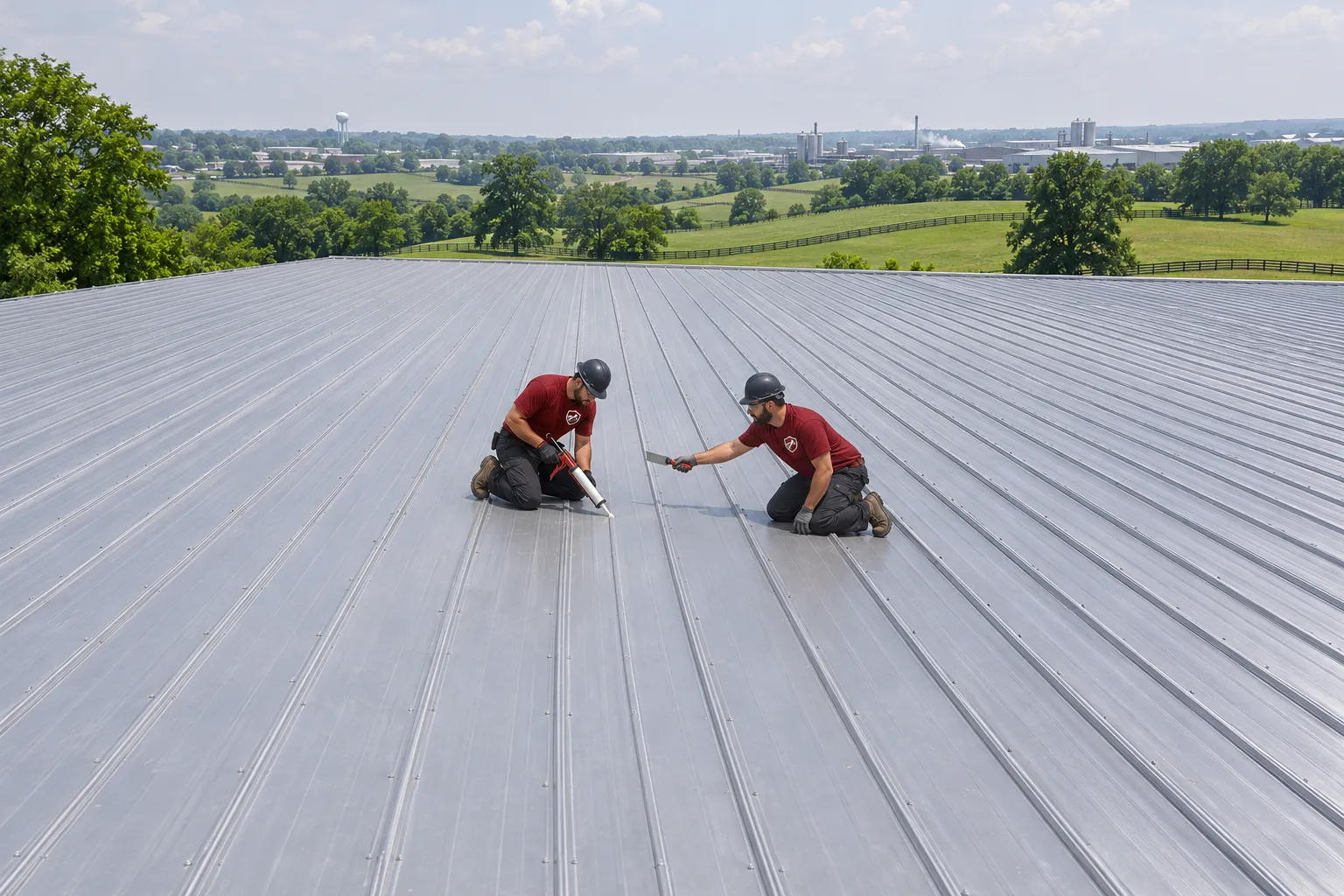
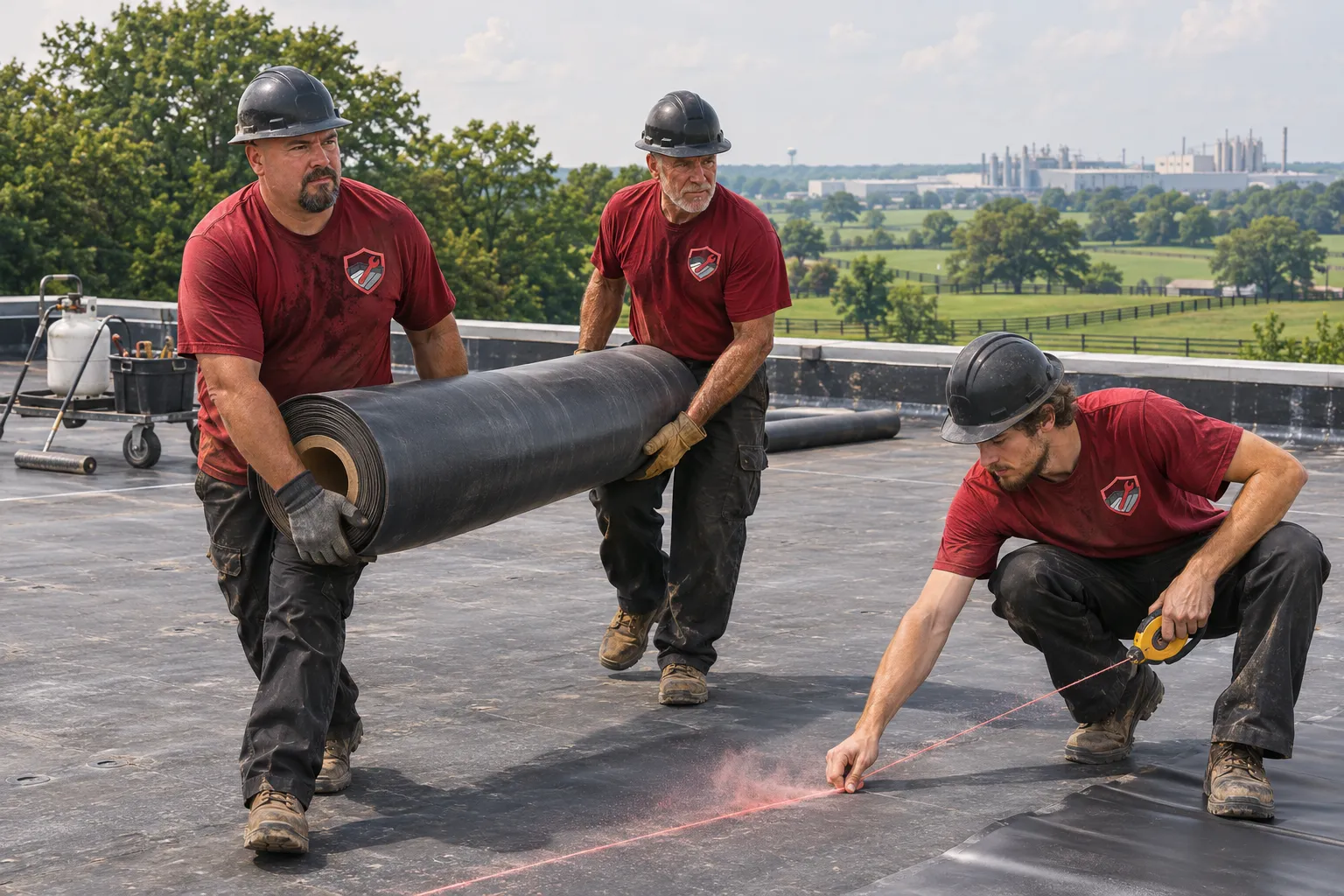
Roof repair crew in logo uniforms patching a commercial flat roof membrane
Georgetown, KY · Commercial Roofs

Georgetown Commercial Roof Repair Contractor

Leak and Damage Repair for Plants, Warehouses, Shops, and Offices

As a Georgetown commercial roof repair contractor, we trace leaks and fix seams, flashing, drains, and metal panels on business and industrial roofs.

  • Leak tracing before any patch
  • Patches matched to your roof
  • Commercial and industrial roofs only

Commercial Roof Repair Problems We See In Georgetown

Call a Georgetown commercial roof repair contractor when any of these show up. Each one points to a seam, drain, flashing, or fastener on the roof above.

  • Ceiling Stains After Rain

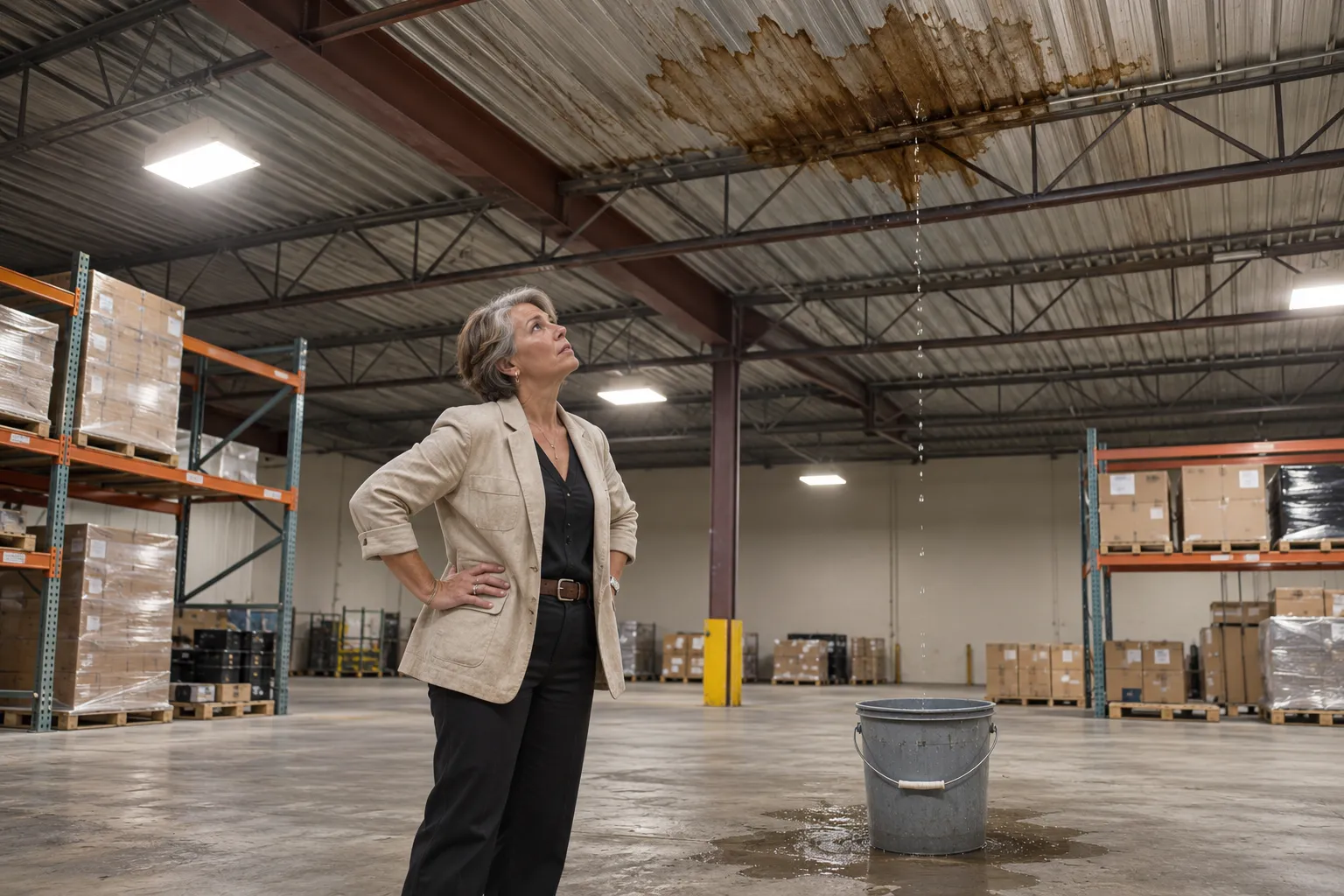
    Brown rings on ceiling tile mean water already reached the deck. The source often sits well upslope, because water runs along deck flutes before it drips.

    Repair First
  • Lifted Seam Edges

    A dirt line along a membrane lap marks an edge that has opened. Wind and freeze-thaw keep working it wider until water gets under the sheet.

    Repair First
  • Water Standing Two Days After Rain

    Dirt rings and algae show where water sits on the membrane. Standing water wears the surface faster and adds weight to the deck.

    Watch
  • Backed-Out Screws On Metal Roofs

    Hot and cold swings move metal panels and walk screws out of the purlins. Each raised head leaves a gap at the washer for rain to follow.

    Repair First
  • Flashing Pulling Away At Curbs

    Membrane peeling off rooftop unit curbs and parapet walls opens a path straight into the building, right where leaks start most often.

    Call Now
  • Dents And Punctures After Hail

    Spring storms around Georgetown bring hail that bruises membrane, dents panels, and cracks skylights. Dated photos taken before cleanup help with any insurance claim.

    Call Now

Best Commercial Roof Repair Services For Georgetown Buildings

Four repair services cover the roofs we work on most. Each card names what an owner usually notices first and the repairs that follow.

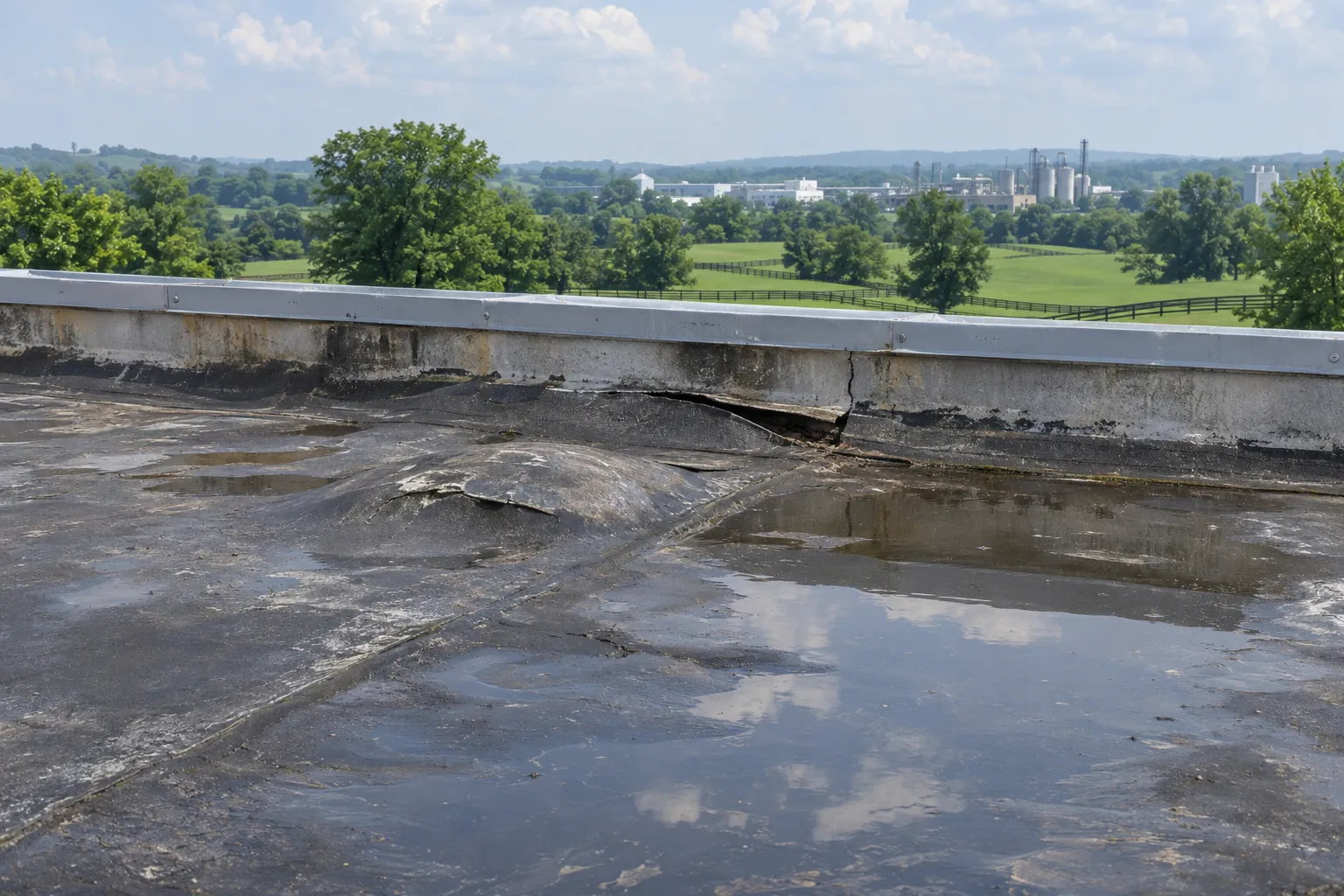
Membrane RoofClose view of a worn commercial flat roof with open seams and patched areas

Flat Roof Repair

You NoticeA lifted seam, a blister, or water sitting near a drain.

TPO, EPDM, PVC, modified bitumen, and built-up roofs get patches of matching membrane on clean, dry roofing, plus curb and wall flashing rebuilt where it pulled loose.

Typical Repairs

  • Welded or primed seam patches
  • Blisters cut, dried, and patched
  • Curb flashing with a termination bar
Flat roof repair in Georgetown →
Metal Panel RoofAerial view of a metal panel roof on a commercial building with laps and fasteners

Commercial Metal Roof Repair

You NoticeRust streaks below a lap or screws standing proud of the panel.

Exposed-fastener roofs on shops, barns, and plants get new screws, resealed laps, and patched or replaced panels in matching gauge and profile.

Typical Repairs

  • Oversized screws for stripped holes
  • Laps stitched and resealed with butyl
  • Rusted eave sections replaced
Metal roof repair in Georgetown →
Inside The BuildingWater stain and drip under a leaking commercial roof inside a building

Commercial Roof Leak Repair

You NoticeA drip over stock, a wet ceiling tile, or a stain that keeps growing.

Leak tracing starts at the stain, measures it against the roof above, and tests one detail at a time until the real source shows.

Typical Repairs

  • Water tests that start low
  • Moisture mapping of wet insulation
  • Rain-day temporary patches
Commercial roof leak repair →
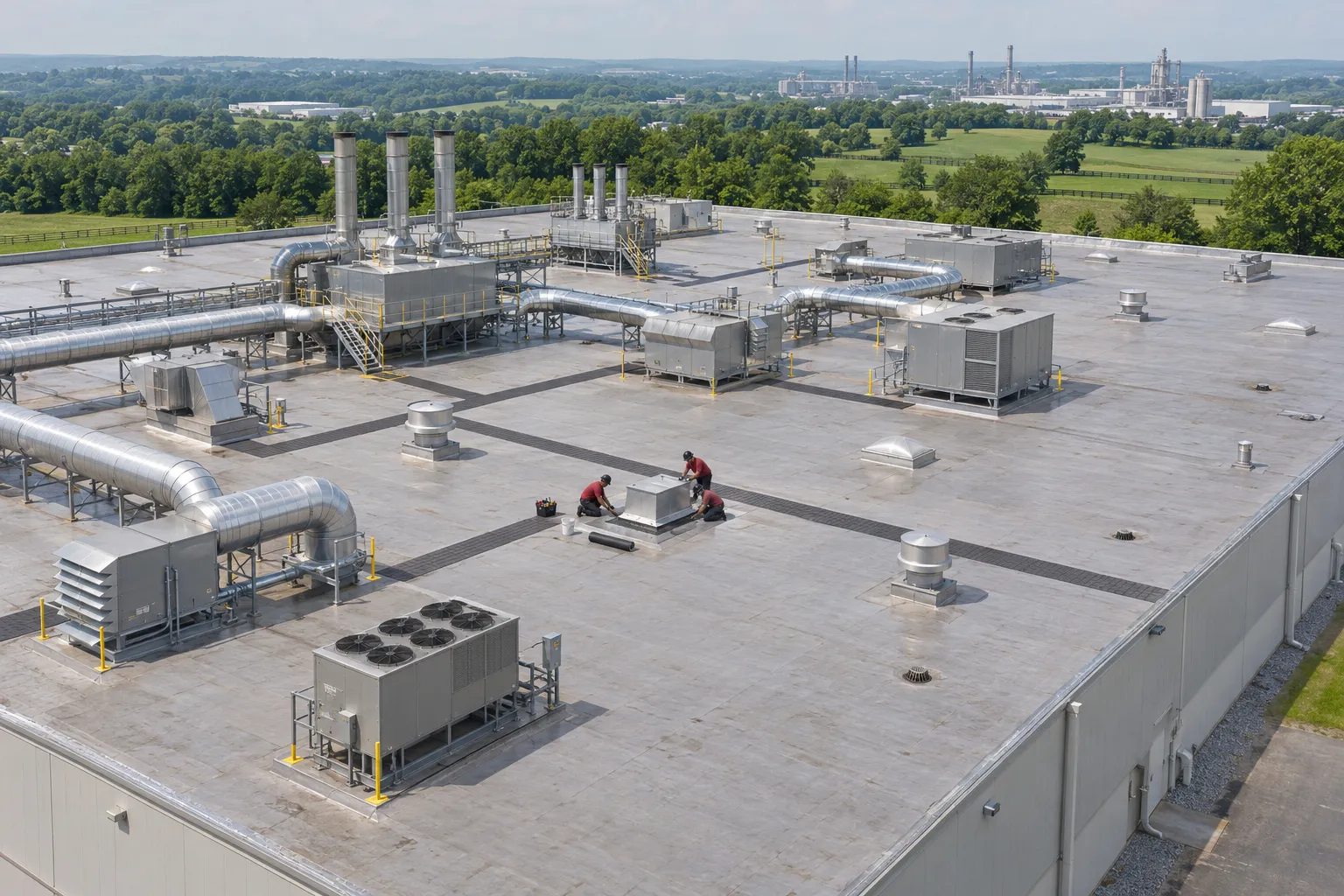
Plant RoofAerial view of a large industrial roof with rooftop units, exhaust fans, and drains

Industrial Roof Repair

You NoticeSoft membrane at an exhaust fan or a drain that holds water.

Plant roofs get repairs scheduled around production, hot work permits, and lockout, with each repair area opened and closed in one shift.

Typical Repairs

  • Chemical-resistant patches near exhaust
  • Drain clamp rings and strainers reset
  • Walkway pads on traffic routes
Industrial roof repair in Georgetown →
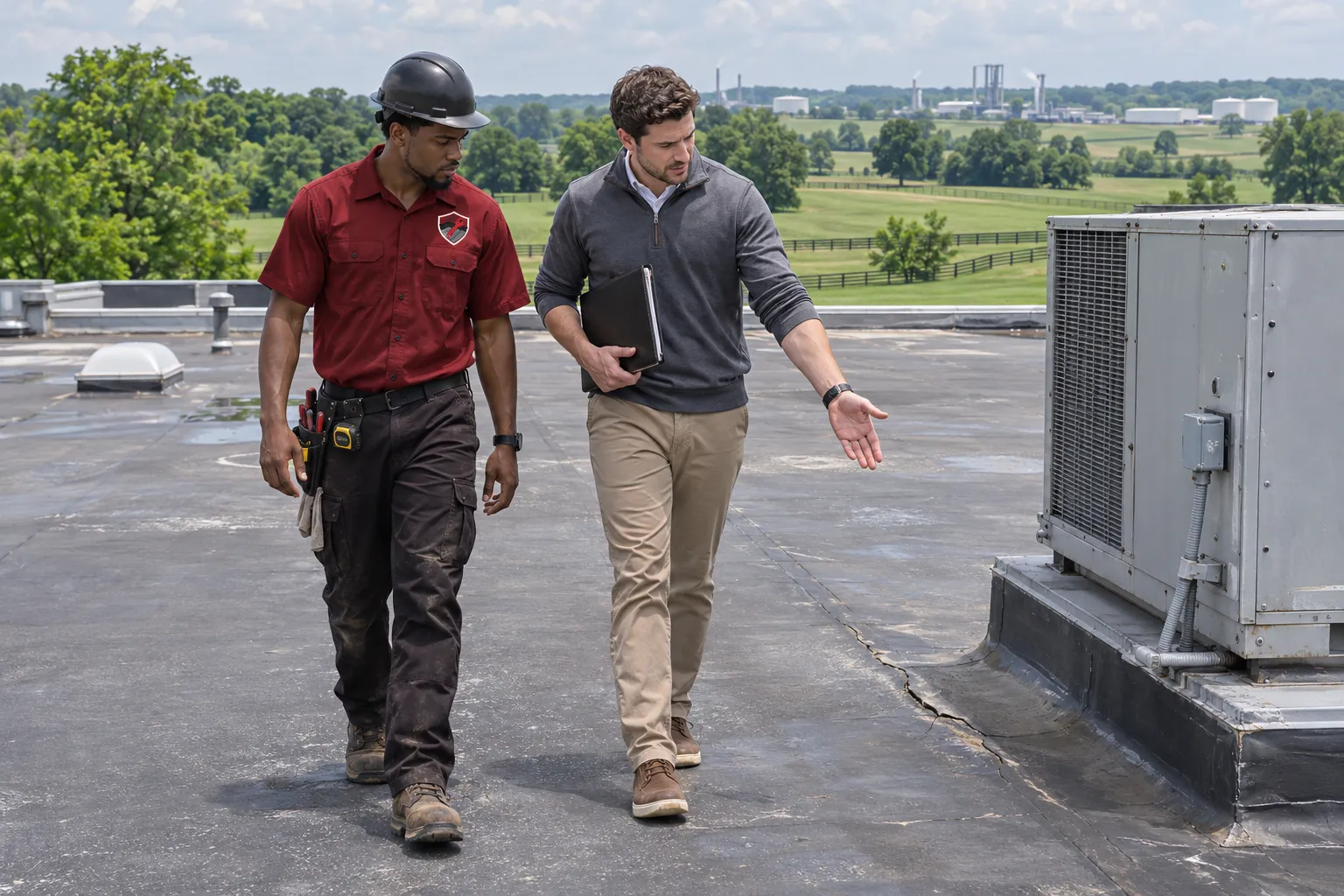
Roofer in a logo uniform walking a commercial flat roof to check seams and drains

Water Coming Through After A Storm?

Book an inspection and we trace the leak from the stain inside to the seam, drain, or flashing on the roof above it.

How A Repair Visit Runs

Every repair follows the same order, so the fix matches the cause and the rest of the roof keeps working.

  1. Inspect Your Roof

    We walk the roof with the interior stain locations in hand, checking seams, flashings, drains, curbs, and fasteners upslope of each wet spot.

  2. Trace The Source

    Suspect details get water-tested one at a time, starting at the lowest point. A moisture meter or infrared scan shows how far wet insulation spreads.

  3. Write The Repair Scope

    You get a plain list of what failed, what gets fixed, and any area where repair stops making sense, such as large sections of wet insulation.

  4. Repair With Matching Material

    Patches follow the original roofing: welded on TPO, primed and taped on EPDM, new screws and sealed laps on metal. Each patch reaches clean, dry roofing on all sides.

  5. Check And Photograph The Work

    Finished repairs are checked, photographed, and marked on a roof plan, so the next inspection can compare each spot against this visit.

Repair, Restore, Or Replace

How much of the roof is wet or worn out sets the answer. Core samples or an infrared scan give that number.

Roof ConditionPoints To RepairPoints To Restore Or Replace
Wet insulationSmall, isolated spotsLarge areas across the field
Leak locationsOne or two roof detailsMany spots that move month to month
Past patchesA few, still bondedPatches stacked on older patches
Membrane feelFlexible, with seams that holdBrittle and shrinking at the walls
Metal panelsSurface rust on solid steelHoles or rust running across panel widths

Benefits of Repairing Your Roof

When the insulation is dry, a repair keeps a working roof in service. This is how the two paths compare on a typical commercial building.

FactorTargeted RepairFull Replacement
ScopeFailed seams, flashings, drains, or panels onlyTear-off down to the deck
Building useWork stays in a small roof area while the building stays openLarger staging, more noise, and wider interior protection
WasteCut-out patches and old sealantThe full roof system hauled away
Cost driversTracing time, access, and the number of details fixedRoof area, deck repairs, insulation, and new edge metal
When it fitsDamage sits in a few places and insulation is dryWet insulation or failures across the whole roof

Our Commercial Roof Repair Service Area

Plants, farm buildings, shops, and offices in these towns are where we repair commercial roofs most. Building somewhere else? Call us or send us a message.

Home BaseGeorgetown

Scott County. Plant, warehouse, office, and shop roofs in and around the city.

  • CynthianaHarrison CountySteel roofs and gutters on damp ground by the Licking River's South Fork
    →
  • WilliamstownGrant CountyStorm checks on ridge caps, rake trim, and windward seams
    →
  • MidwayWoodford CountyPermitted repairs go through the Woodford County inspector
  • Stamping GroundScott CountyA farm community with barn, shop, and equipment building roofs
  • SadievilleScott CountyGutter and eave rust checks on buildings near Eagle Creek
  • CorinthGrant CountyThe area reaches into neighboring counties, so each address gets its county confirmed
  • BerryHarrison CountyHarrison County inspector handles permitted repair work

Questions For A Georgetown Commercial Roof Repair Contractor

Owners around Georgetown ask these before booking a repair visit.

What does a commercial roof repair cover?

One defined problem

A repair fixes one defined problem on a working roof: an open seam, a cracked pipe boot, a loose panel, or a clogged drain. Patches use the same material as the roof, so a TPO patch gets welded and an EPDM patch gets primed and taped. Each patch runs past the damage onto clean, dry roofing on every side.

What roof damage does Georgetown weather cause?

Freeze-thaw, rain, and hail

Freeze-thaw swings open laps, crack flashing, and back screws out of metal panels. The Lexington station that covers Georgetown averages close to 50 inches of rain and melted snow a year, per NWS Louisville, so drains and scuppers carry heavy loads. In January 2024 Lexington went from minus 7 degrees to 64 in four days, a swing that loosens fasteners.

Which storm repairs come up most around Georgetown?

Edge metal, seams, hail

Lifted edge metal, wind-opened seams near the roof perimeter, and hail punctures lead the list. NWS Louisville noted hail across the Lexington area in March 2024. After a storm, check the corners for loose coping, clear limbs out of drains, and take dated photos before cleanup if an insurance claim is possible.

Is repairing an aging commercial roof worth it?

Yes, if insulation is dry

Repair pays off when the insulation underneath is dry and the problems stay at seams, flashings, or a few panels. Once leaks move around the roof month to month, or patches sit on older patches, restoration or replacement becomes the better call. A record of past repairs shows which way the roof is trending.

What repair issues show up on large plant roofs around Georgetown?

Long leak paths, drains

Size changes how leaks behave. Plants near Georgetown run up to the scale of Toyota Motor Manufacturing Kentucky, close to nine million square feet by Toyota's count, and water on roofs that big travels far along deck flutes. Remote internal drains clog, expansion joints split between additions, and dozens of exhaust fans each need their flashing checked.

How often should a commercial roof be checked for repairs?

Spring, fall, after storms

Twice a year, plus after hail or high wind. Fall visits clear leaves before winter, and spring visits find what freeze-thaw opened. Each check covers drains and strainers, seam and lap edges, curb flashing and pitch pans, punctures and blisters, and metal screw heads. A photo log lets each visit compare against the one before it.

Hire A Georgetown Commercial Roof Repair Contractor

Tell us where the water shows and what the roof is made of. We inspect it, trace the source, and repair it.

Call Us +1 (606) 221-5686