Flat Roof Repair
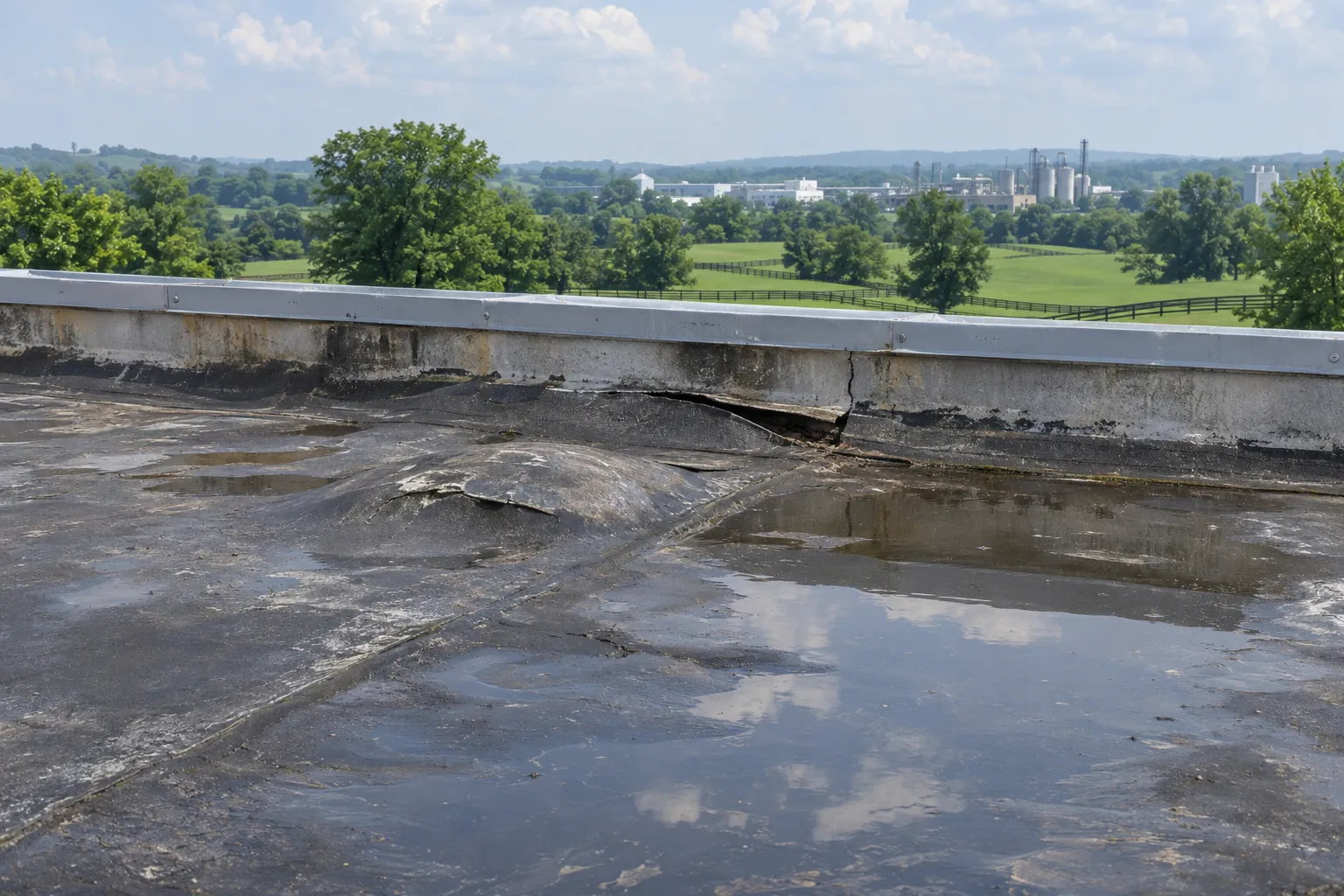
TPO, EPDM, PVC, modified bitumen, and built-up roofs on offices, storefronts, and dock areas get repaired in matching membrane.
- Open seams and punctures
- Blisters and ponding
- Curb and wall flashing
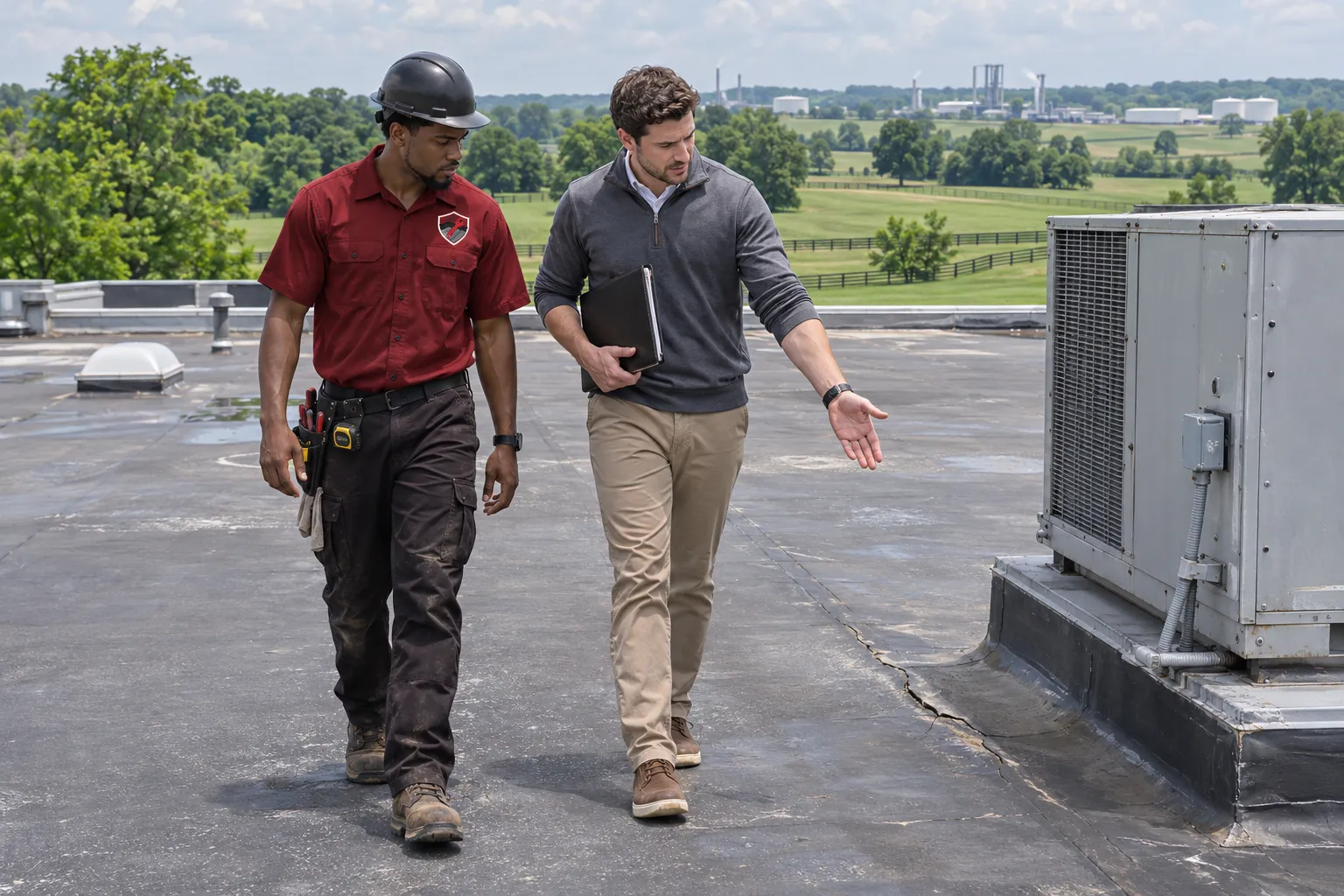
We offer commercial roof repair services in Georgetown for flat, metal, and plant roofs, plus leak tracing when the source is hard to find.
Each of our commercial roof repair services in Georgetown covers a different roof or problem. Pick the one that matches what you see.
TPO, EPDM, PVC, modified bitumen, and built-up roofs on offices, storefronts, and dock areas get repaired in matching membrane.
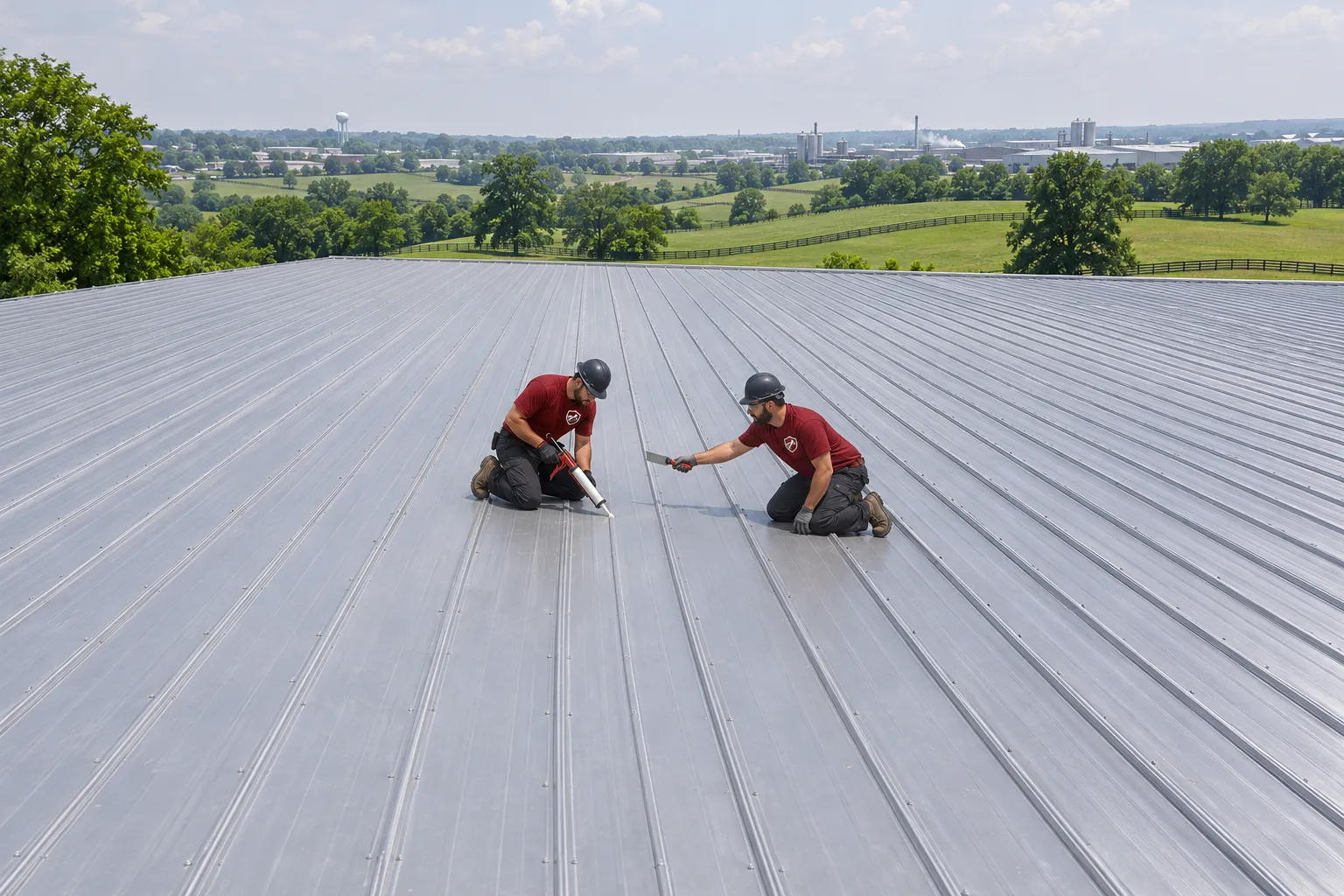
Exposed-fastener and panel roofs on shops, barns, warehouses, and plant additions get new screws, sealed laps, and matching panels.
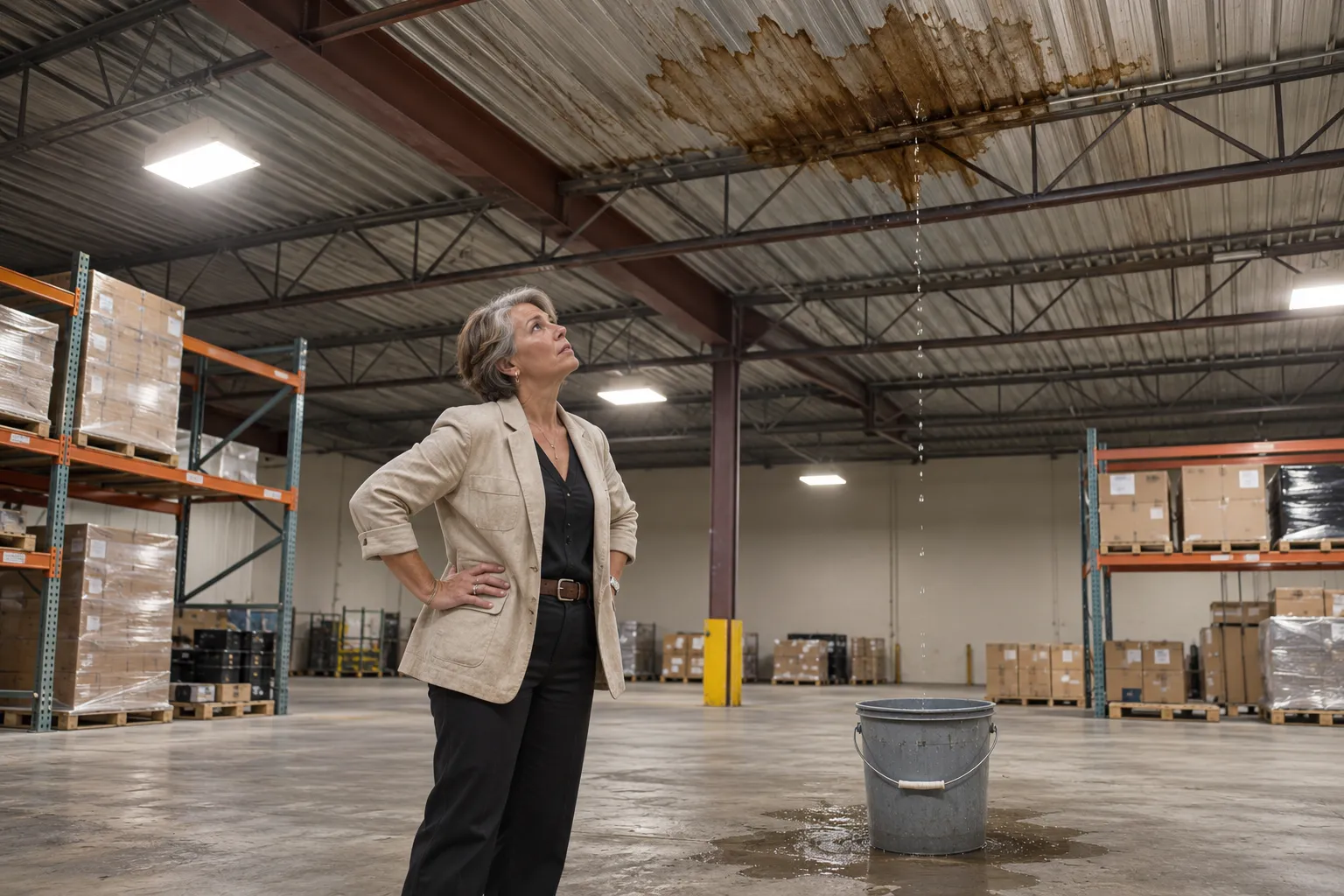
Leaks whose source is hard to find get traced from the stain inside to the detail above, then fixed at that detail.
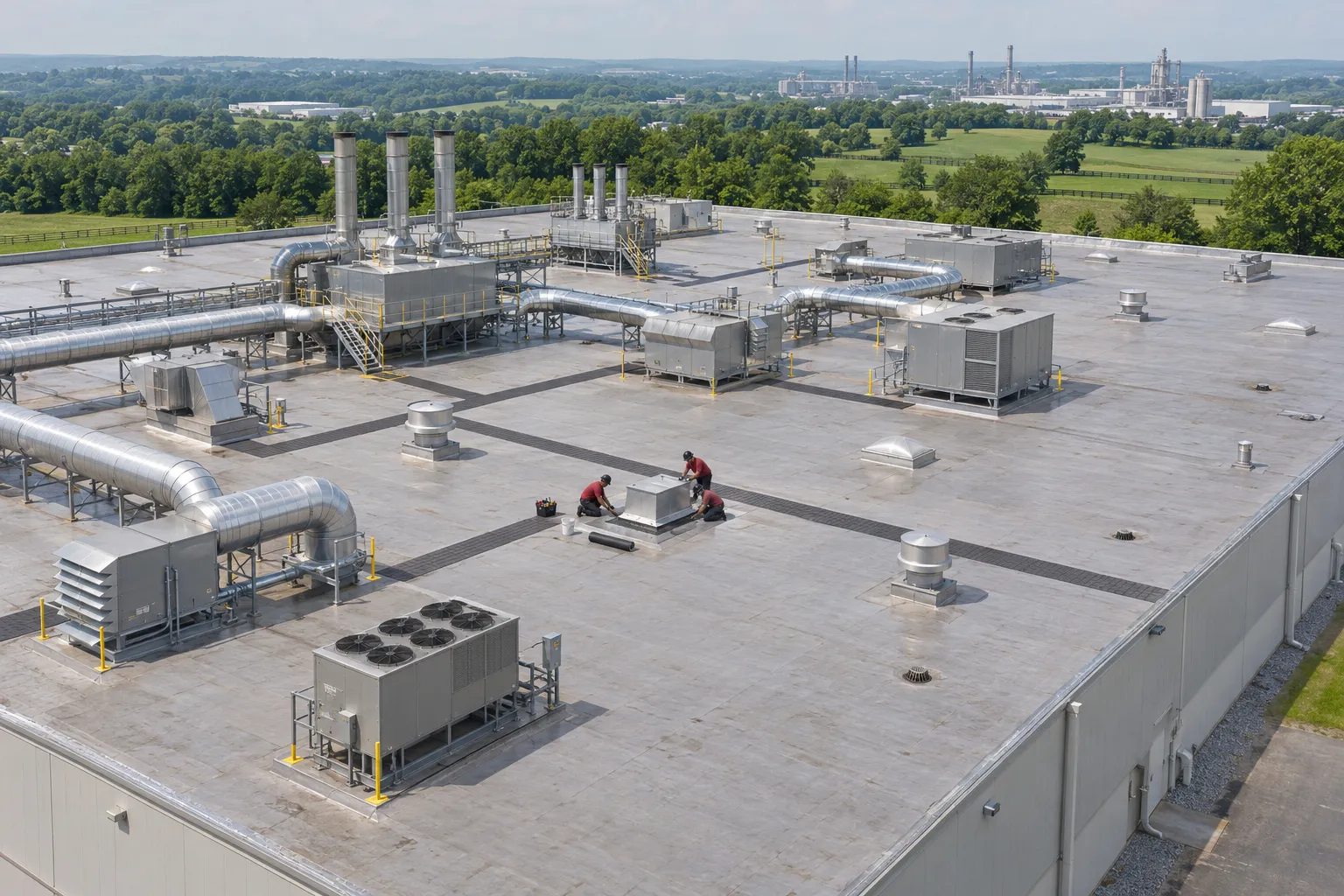
Plant and distribution roofs with exhaust fans, internal drains, and heavy maintenance traffic get repairs planned around production.
Match what you see on the roof or ceiling to the service that fixes it. Many buildings need two of these during the same visit.
| What You See | Service | What Gets Fixed |
|---|---|---|
| Lifted lap edge on a membrane roof | Flat roof repair | Welded or taped seam patch |
| Rust streaks below a metal lap | Metal roof repair | Lap cleaned, stitched, and resealed |
| Stain inside with no damage above it | Leak repair | Traced source, then the matching fix |
| Soft membrane beside an exhaust fan | Industrial roof repair | Chemical-resistant patch |
| Water sitting by a drain | Flat or industrial roof repair | Strainer, clamp ring, or low spot repaired |
| Screws standing proud of the panels | Metal roof repair | Screws snugged, capped, or replaced |
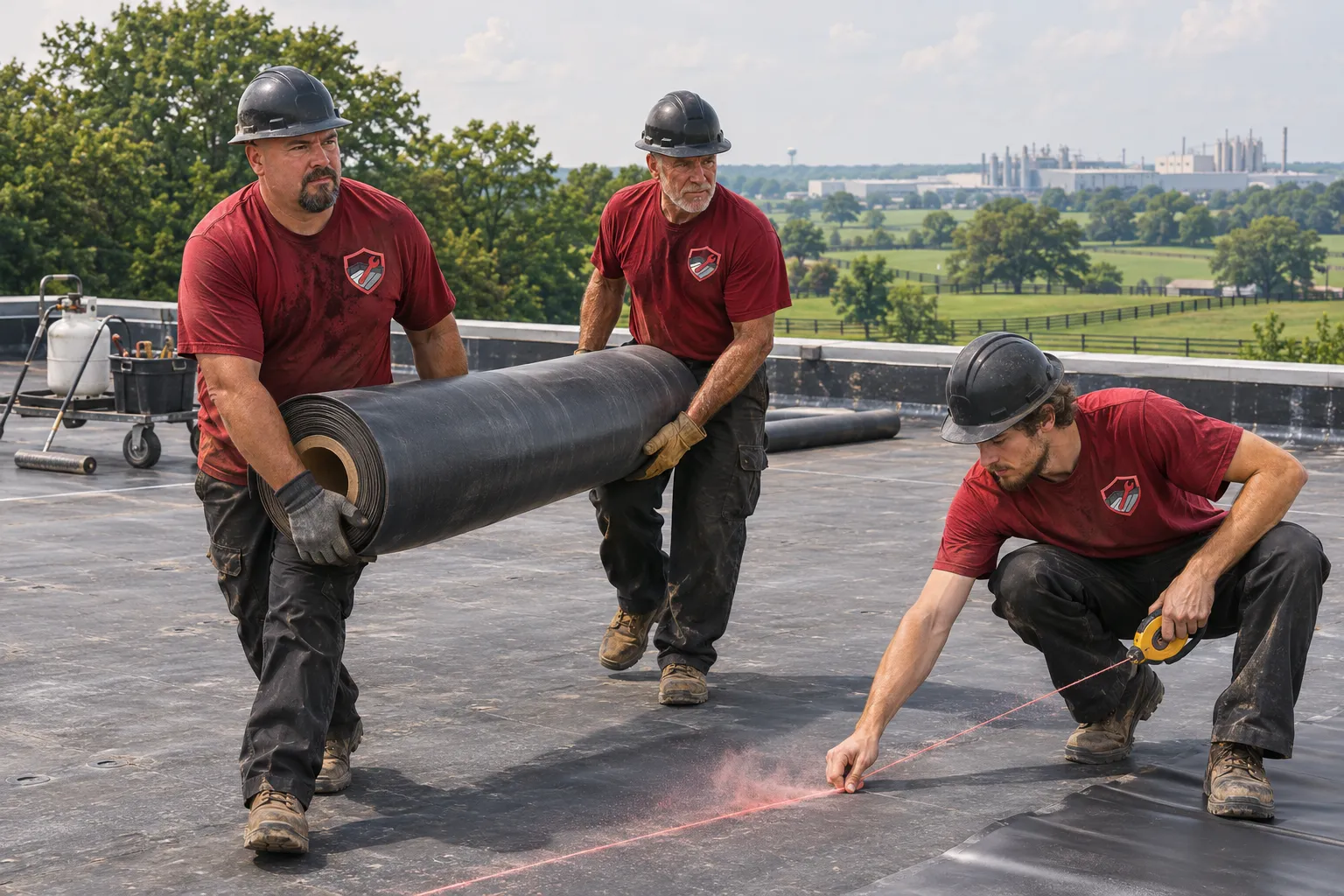
Book an inspection. We find what failed and tell you which repair fits before any work starts.
Each service runs on the same steps, so the patch matches the roof and the cause gets fixed.
We start inside at the stains, then walk the roof to the seams, flashings, drains, and fasteners above them.
Cores or a scan show how much insulation is wet. Small, isolated damage points to repair, and wide wet areas point to restoration or replacement.
Patches follow the roof: welded TPO and PVC, primed EPDM, torch or cold-applied bitumen, and new metal of matching gauge and profile.
Ladders and material sit away from entrances, units near the work get shut down briefly, and tenants hear ahead of time before torches or welders run.
Each fix is photographed and marked on a roof plan, so the next visit compares the roof against this one.
Repair stops making sense at a few clear points. We tell you when a roof reaches one of them.
Core samples or an infrared scan showing wide wet areas mean those sections need replacing, since patches over wet board keep failing.
Years of repairs stacked on the same seams, curbs, and drains show the membrane itself is wearing out across the roof, beyond what another patch can hold.
When laps open across the whole field instead of a few spots, restoration covers the roof better than one repair at a time.
Metal panels with rust running edge to edge, or screws spinning in rotted steel, call for new panels or a full panel run.
A leak that shows up in a new place each month points to a roof whose seams and flashings are failing in many spots at once.
Roofs dented across most panels often call for new panels or a new roof over the old one, based on what the paint and laps show.
Questions owners ask when choosing between repair services.
How much of the roof is wet or worn out settles it. Damage in a few spots gets repaired, an aging roof with dry insulation suits restoration, and wet or failed roofing across wide areas calls for replacement. Core samples or an infrared scan show how much insulation under the membrane is wet, and that number drives the choice.
Temporary repairs use mastic, tape, or tarps that stick to a wet or cold roof and hold water back until the weather turns. Permanent repairs use matching membrane, welded or primed patches, or new metal on a cleaned, dry surface. Every temporary patch should be photographed and marked so it gets replaced on the next dry day.
Kentucky's 2018 building code, built on the 2015 International Building Code, covers commercial roof repairs and reroofing statewide, per the Kentucky Department of Housing, Buildings and Construction. Repair materials are chosen to work with the existing roof covering and its fire classification. Edge metal securement, overflow drainage, and limits on adding layers over wet roofs come up most.
Three things set it: the type of damage, the roof system, and access. One open seam on an easy-to-reach roof costs far less than wet insulation around several curbs. Hidden leaks add testing time, weathered TPO or EPDM needs more prep, and a rain-day temporary patch adds a second visit. Grouping repairs into one visit trims setup time.
Yes. A metal shop with a flat office roof, or a plant with clogged drains and exhaust damage, often needs two services in one trip. Grouping the seam patches, screw replacements, and drain resets into one visit trims setup time and puts every repair on the same roof plan.
TPO, PVC, and EPDM single-ply roofs, modified bitumen and built-up asphalt roofs, and exposed-fastener metal panel roofs. Each gets patched in its own material: welded on TPO and PVC, primed and taped on EPDM, torch or cold-applied on bitumen, and screws, butyl, or matching panels on metal.
Tell us what the roof is made of and what you are seeing. We match it to the right repair and fix it.
Leave a name and number, or call +1 (606) 221-5686 now.