TPO And PVC
Heat-welded single-ply roofs get welded patches, new pipe boots, and reflashed curbs.

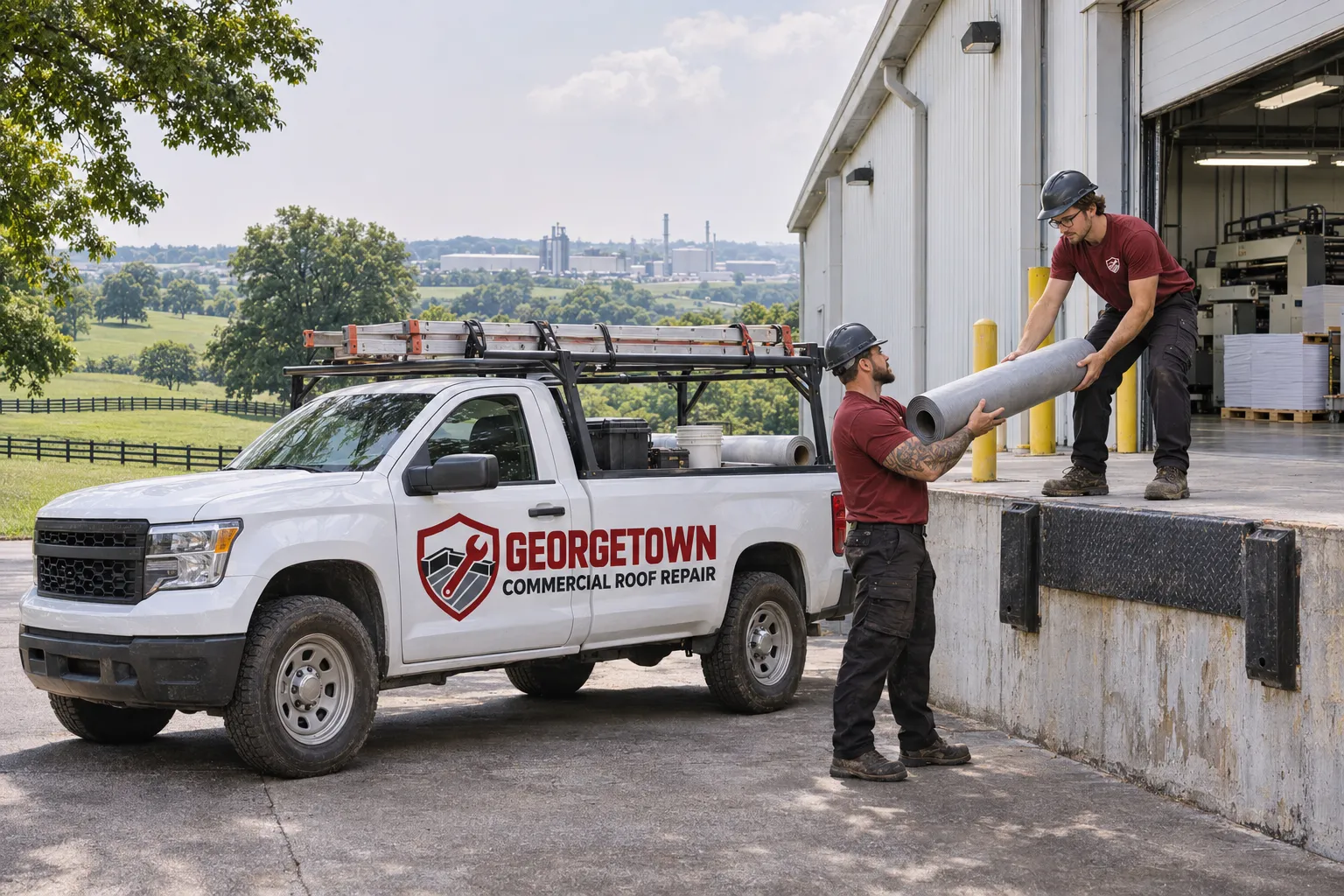
As a Georgetown roof repair company, we work only on commercial roofs: flat, metal, and plant roofs on business, farm, and industrial buildings.
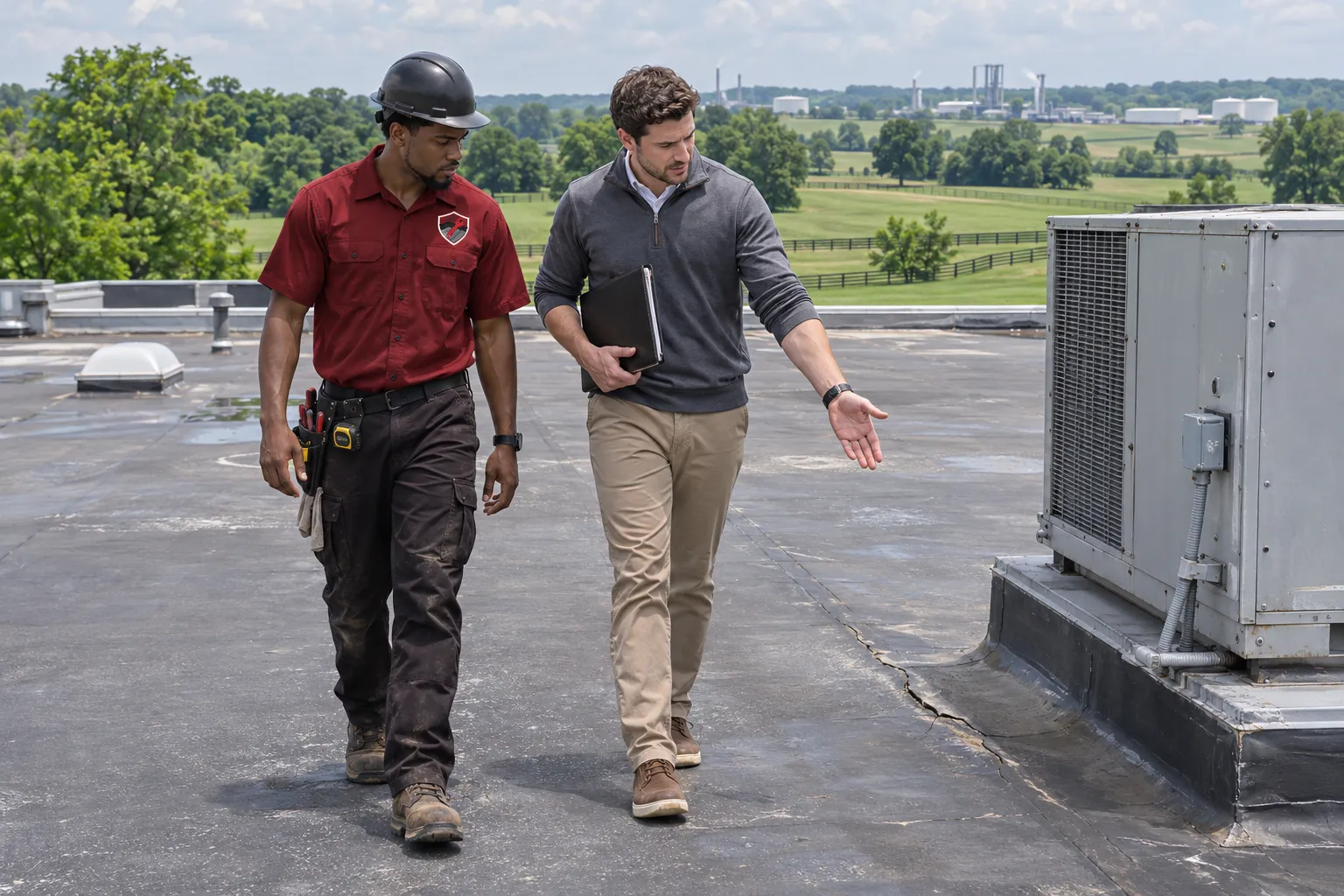
Our Georgetown roof repair company works on commercial roofs only, and every job starts with finding why water gets in. A patch over the wrong spot wastes a visit, so tracing comes before repair.
We repair the defined problem, match the material already on the roof, and tell you plainly when a roof has moved past repair into restoration or replacement.
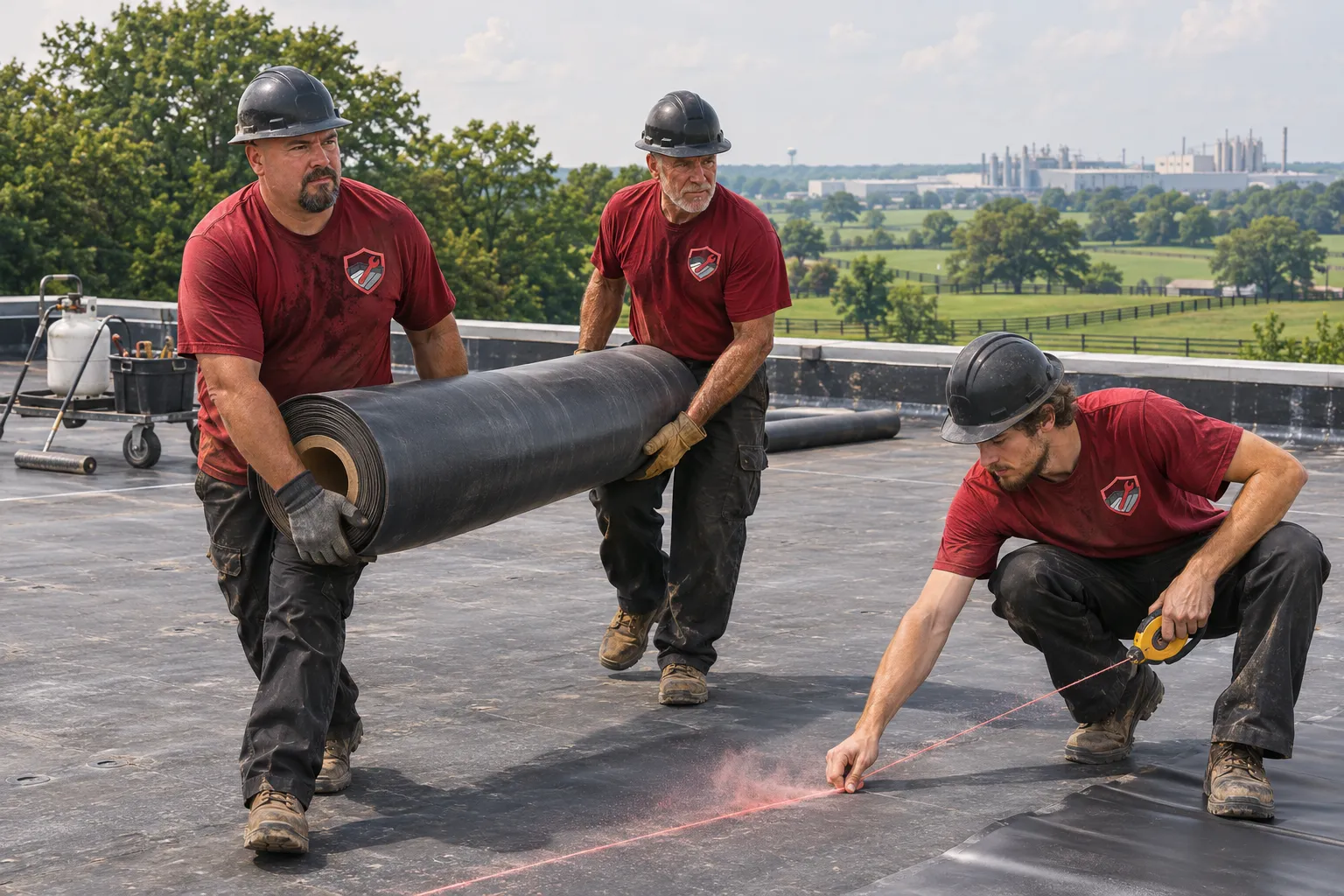
That points to a source nobody found yet. Book an inspection and we trace it from the stain inside to the roof above.
Each inspection follows the same list, so nothing between the stain and the source gets skipped.
Plain limits make a repair plan easier to trust. These are the lines we hold on every roof.
| Situation | What We Do | What We Refuse To Do |
|---|---|---|
| Wet insulation under a leak | Cut it out and replace it | Patch over wet board |
| Weathered TPO | Run a test weld beside the repair | Weld to chalky sheet without testing |
| Rusted-through lap | Cut it back and patch with matching metal | Smear sealant over perforated steel |
| Roof past repair | Say so and explain restoration or replacement | Keep patching a roof that needs more |
| Temporary rain-day patch | Mark it for a permanent fix | Leave it as the final repair |
Repairs follow the roof already on the building, so each system gets its own methods.
Heat-welded single-ply roofs get welded patches, new pipe boots, and reflashed curbs.
Rubber roofs get primer and tape patches, new seam tape, and attention to shrinkage at the walls.
Asphalt roofs get torch or cold-applied patches and blister cuts down to dry layers.
Exposed-fastener and panel roofs get screw swaps, lap sealing, and new panel sections.
Skylight panels, pipe boots, and pitch pans get replaced or resealed wherever they cross the roof.
Strainers, scuppers, box gutters, coping, and edge metal get repaired so water leaves the roof.
What owners ask about the visit itself, the paperwork, and the cleanup.
Yes. The work stays on the roof in a small area, so the building stays open. Ladders, hoists, and materials go away from entrances and walkways. Plan for tarps over stock under the leak, a short unit shutdown, hatch access with the key holder's number, and tenant notice before torches or welders run.
Roof work splits between repair expenses and improvements, and IRS Publication 946 says Section 179 can cover roofs placed on existing nonresidential buildings. A CPA decides which treatment fits a given job. Invoices that separate leak tracing, flashing work, drain parts, and panel replacement give the CPA what it takes to sort repairs from improvements.
Debris from drains, gutters, and scuppers gets bagged and carried off the roof, because Georgetown, Scott County, and Georgetown College share a KPDES Phase II MS4 stormwater permit. Drain bowls get plugged during nearby cutting, sealant and primer cans stay in a closed bin, and rinse water gets caught at the downspout.
Note when the leak happens, where the water shows inside, and what the weather was doing, because that pattern points to the seam, drain, or flashing above. Measure each wet spot from walls or columns, list rooftop equipment added or serviced lately, and find the hatch and its key holder. Dated photos of the stains help even more.
Tell us where it leaks and what the roof is made of. We trace it, repair it, and show you what we fixed.
Leave a name and number, or call +1 (606) 221-5686 now.