Eave Panel Replacement
Rusted eave sections get cut out and replaced with new panels matching the old profile, rib height, and gauge, lapped in the direction water runs.
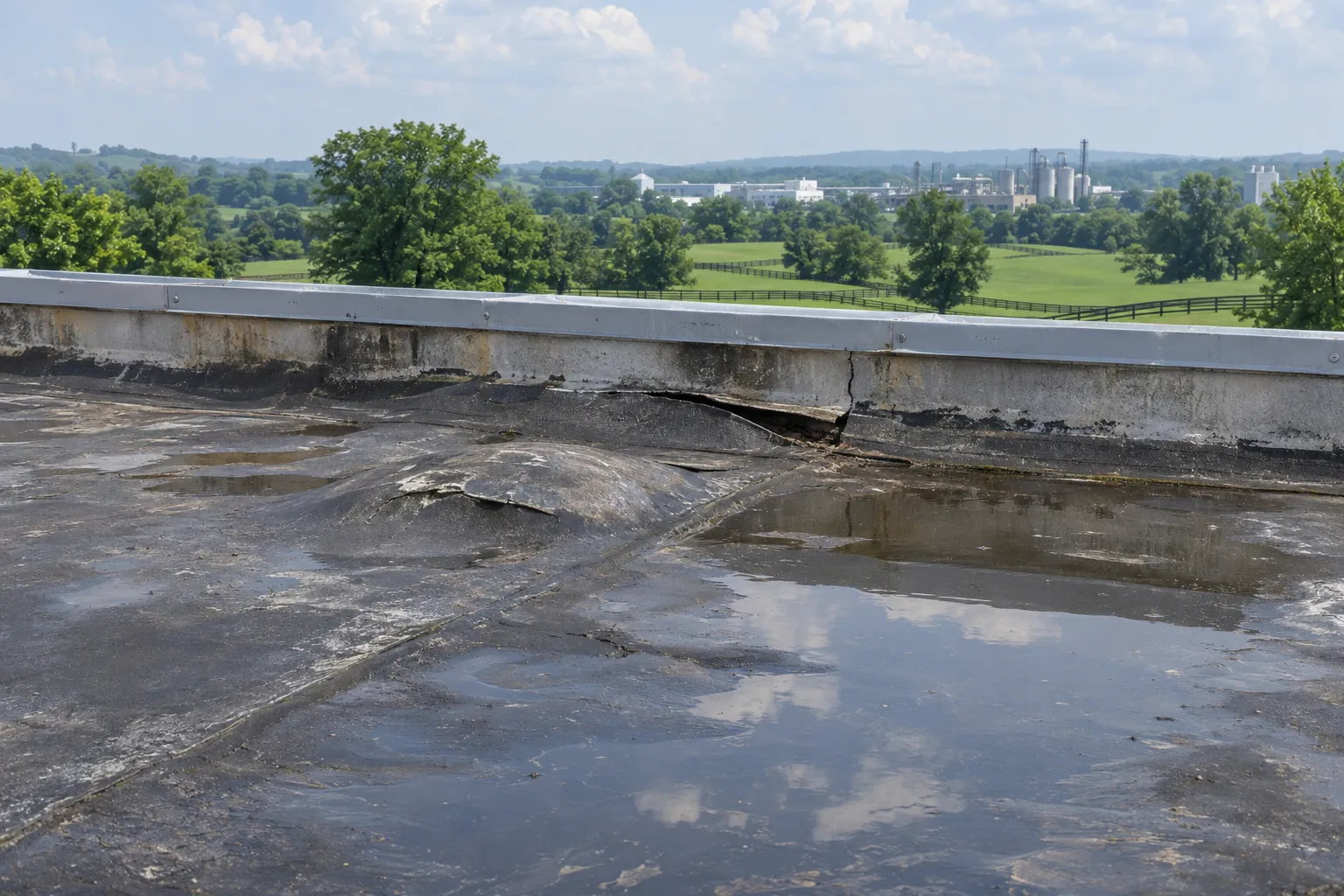
As a Cynthiana commercial roof repair contractor, we fix rusted panels, gutters, laps, and flat roof flashing on business and farm buildings around town.
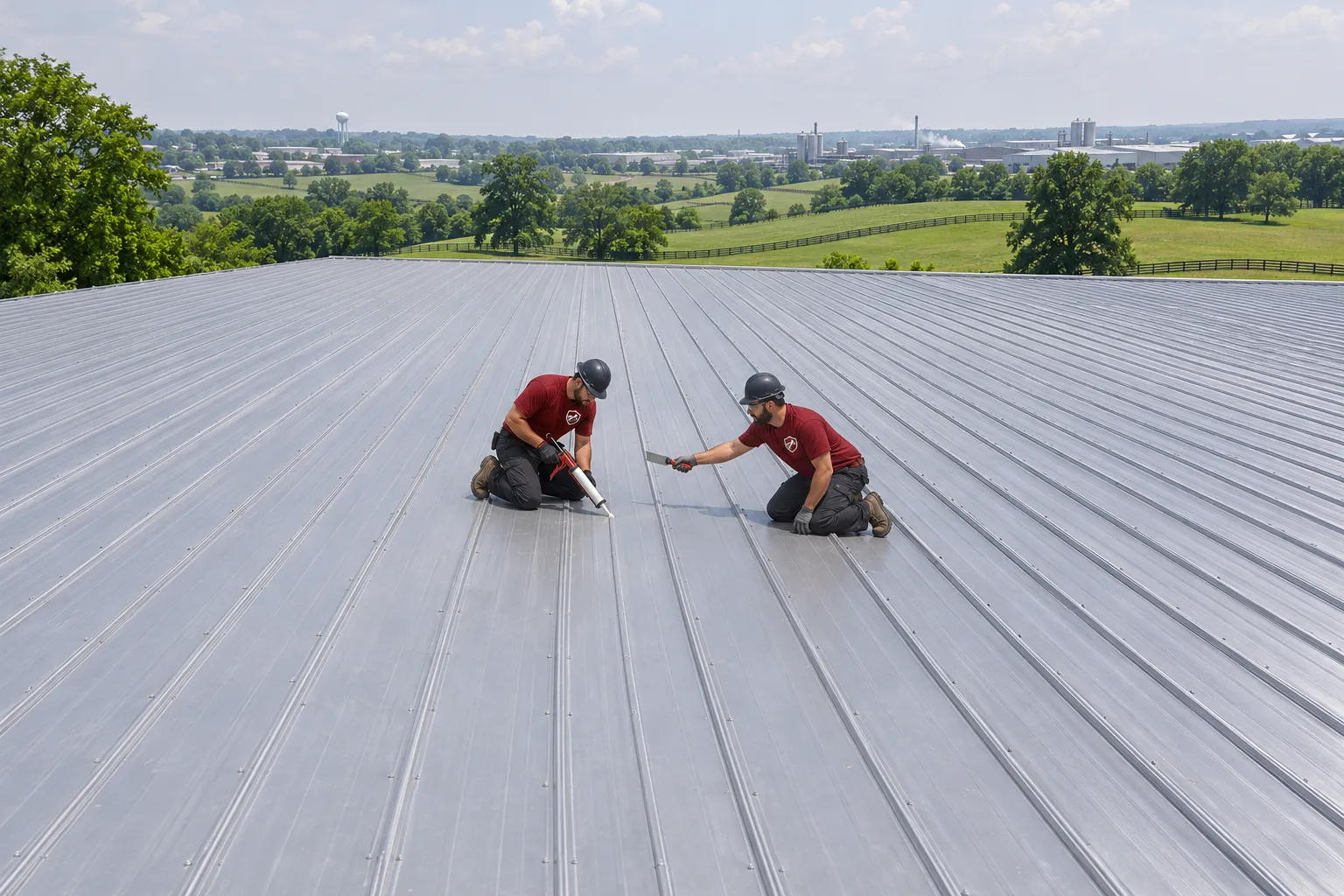
Low, damp ground along the Licking River's South Fork keeps moisture around nearby buildings, and their steel roofs rust faster at the eaves and gutters. A Cynthiana commercial roof repair contractor starts with water handling and corrosion on those buildings.
Repairs here center on rusted eave panels, gutter seams and outlets that rust open, and downspouts that empty against foundations. Larger structural repairs wait until flood plain status is confirmed with Harrison County.
Buildings on damp ground show corrosion and water handling problems first. These are the signs we look for in Cynthiana.
The lowest panel courses stay wet longest, so rust shows along the eave and at the bottom of wall panels before anywhere else on the building.
Gutter joints and outlets corrode from the inside, then drip down the wall every time it rains and keep the panels below them wet.
Orange flakes or stains seen from inside under a flat roof mean moisture has been reaching the deck from above.
Water dumped against the wall soaks the ground the building already sits on and splashes back onto the low panels.
Rusting washers and heads near the eave let water into the purlin line right below them.
Steel with surface rust and dry insulation under it can still be repaired. This is how a repair compares with replacing a corroded roof.
| Factor | Repair | Replacement |
|---|---|---|
| Steel condition | Surface rust on solid panels | Perforated panels across the roof |
| Gutters | Resealed seams and new outlets | Full gutter runs replaced with the roof |
| Deck | Local rust treated and primed | Deck sections replaced during tear-off |
| Water handling | Downspouts extended away from the walls | Drainage reworked with the new roof |
| Building use | Shop or office stays in use | Contents protected across the whole floor |
These repairs come up most on Cynthiana buildings, from steel shops and farm buildings to flat-roofed storefronts.
Rusted eave sections get cut out and replaced with new panels matching the old profile, rib height, and gauge, lapped in the direction water runs.
Seams get cleaned and resealed, rusted outlets replaced, and hangers reset so each gutter slopes toward its outlet again.
Screws with rusted heads come out, and new screws with fresh washers go in, oversized wherever the old hole is stripped.
Steel deck rust seen from inside gets checked from above, wire-brushed, and primed, or cut out where the steel has thinned.
Storefront and office roofs get welded or taped patches on open seams, matched to the membrane already on the roof.
Extensions and splash blocks carry water clear of the wall, so low panels and the ground at the foundation can dry out.
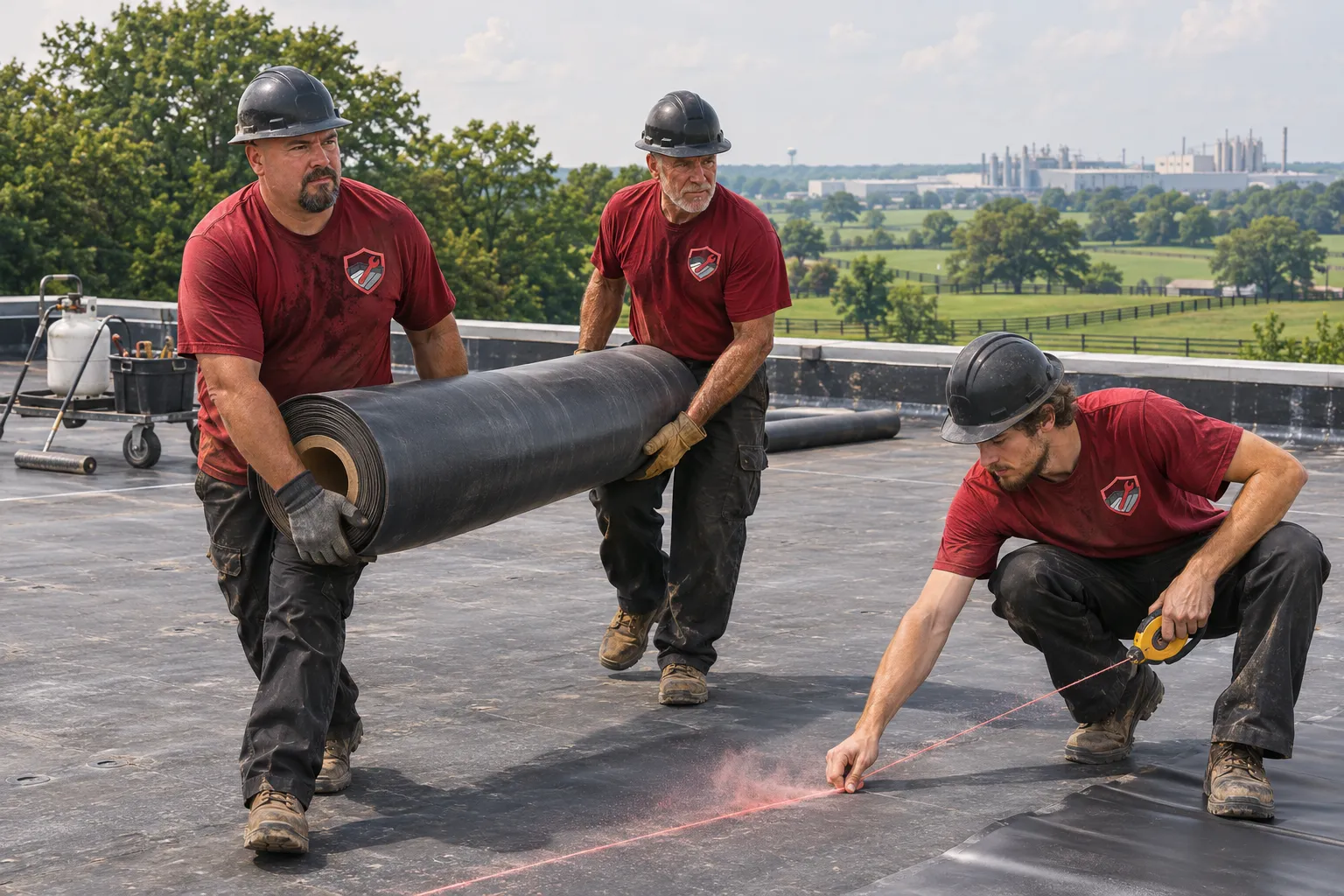
A rusted seam or outlet is letting go. Book an inspection and we reseal it and check the eave panels beside it.
Each visit starts with water handling, since that is what drives corrosion on these buildings.
We check eave panels, gutters, outlets, and downspouts first, then the field, laps, and screws, and look at the deck from inside wherever we can reach it.
Downspout discharge, splash marks on low panels, and wet ground at the walls show how water leaves the building and where it lingers.
Larger structural roof and deck repairs go to the Harrison County inspector, and flood plain status gets confirmed with the county first.
Rusted panels and gutter sections are replaced, surface rust is wire-brushed and primed, and failed laps are stitched and resealed.
Extended downspouts turn water away from the walls, so the repaired eave stays drier through the next wet season.
Farm buildings, plants, and shops in the towns around Cynthiana get the same repair approach. Somewhere else? Call us or send us a message.
Scott County. Our home base for flat, metal, and plant roof repairs.
Questions owners ask about roofs near the river and around Harrison County.
Buildings on low, damp ground along the Licking River's South Fork see rust on steel roofs and gutters sooner. Watch the eave panels and lowest wall panel courses, gutter seams and outlets, rust on the steel deck seen from inside under flat roofs, and downspouts emptying against foundations. Confirm flood plain status with Harrison County before larger structural repairs.
Permit questions for Cynthiana and Berry go to the Harrison County local building inspector on the state's list. Call with the repair scope in plain terms, such as square feet of membrane, panels, or deck work. City addresses should also ask whether Cynthiana runs its own process.
Seams that rusted open but still have solid metal around them get cleaned, primed, and resealed, and rusted outlets get replaced. Sections where the gutter bottom has rusted thin are cut out and replaced with new metal. New hangers keep the run sloped toward its outlet, so water stops sitting in the seams between rains.
Rust on the underside of a steel deck means moisture has been reaching it, from a roof leak, condensation, or both. The roof above gets checked for open seams and wet insulation, and the deck gets probed for thinning. Thin or perforated deck sections are replaced before new insulation and membrane go over them.
Downspouts should empty away from the foundation, onto splash blocks or into extensions that carry water clear of the wall. Water dumped at the base of a building on damp ground keeps the low wall panels wet and speeds up rust along the eave line above them.
Tell us what the roof and gutters are made of and where water shows. We check the eaves first and repair what has rusted.
Leave a name and number, or call +1 (606) 221-5686 now.