TPO And PVC Seam Welds
Weathered TPO gets membrane cleaner and sheet prep, then a hot-air welded patch with rounded corners. PVC gets a weldability check before its patch goes on.

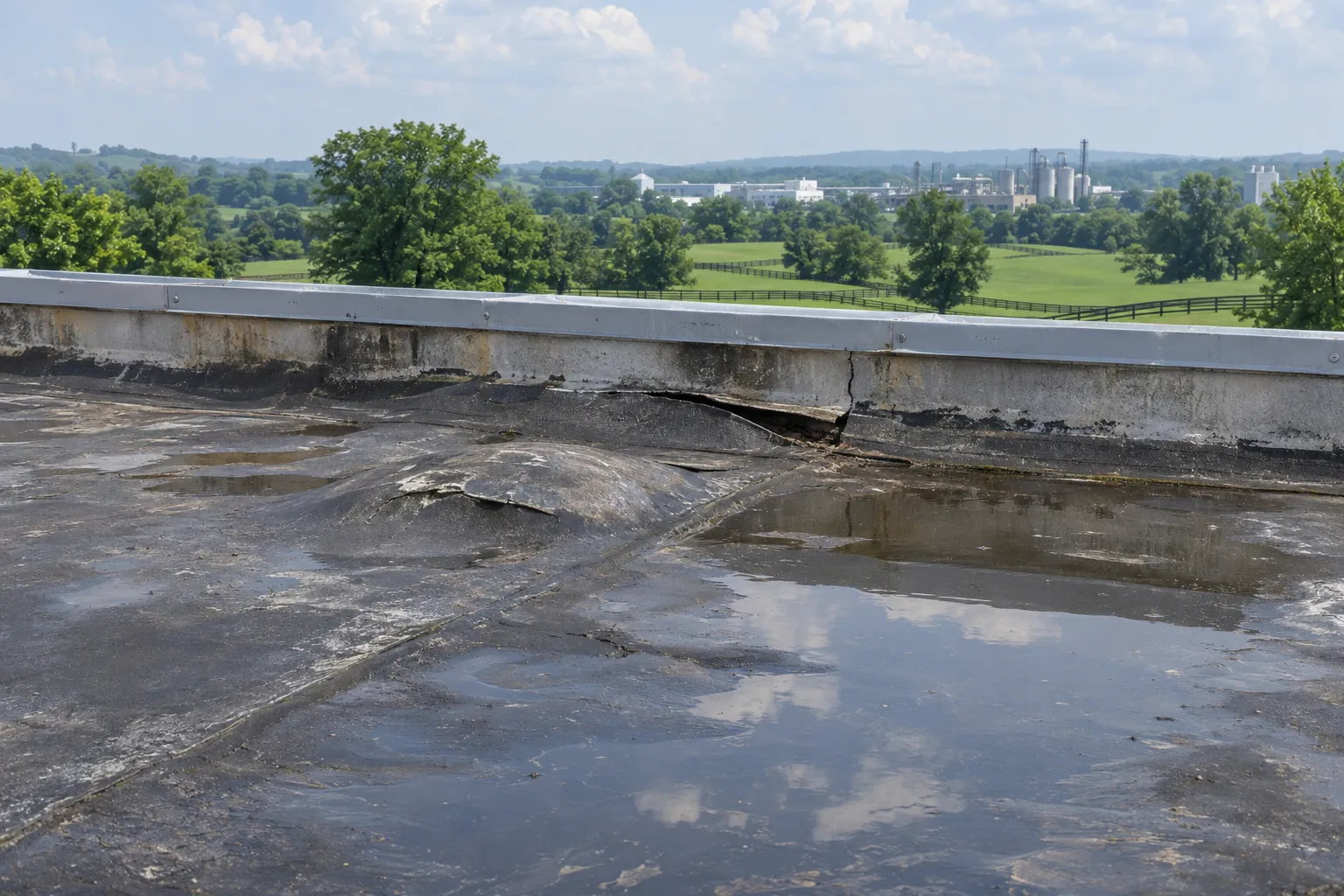
As a Georgetown flat roof repair contractor, we patch TPO, EPDM, PVC, modified bitumen, and built-up roofs with matching membrane on clean, dry roofing.
A Georgetown flat roof repair contractor checks these five details before patching. They show whether a patch holds or the roof needs a bigger fix.
| What We Check | Repair Holds | Bigger Fix Needed |
|---|---|---|
| Seams | Open in a few spots, membrane still flexible | Seams aging across the whole field |
| Insulation | Dry under the membrane, confirmed by scan or core | Wet over large sections |
| Blisters | A few firm ones away from foot traffic | Dozens across the field from trapped moisture |
| Flashing | Pulled loose at one curb or wall | Failing at most walls and curbs |
| Weathered TPO | A test weld beside the repair holds | Chalky sheet that refuses a weld |
Each of these leaves a mark you can spot from the roof hatch or the ceiling below.
A lifted lap edge with a dirt line beside it. Wind and freeze-thaw keep prying the edge open until water runs under the sheet.
Small holes and cuts cluster around rooftop units and walkways, where tools and dropped screws land. Each one lets water into the insulation.
Raised bubbles form when heat expands trapped air or moisture between layers. Cracked or growing blisters get cut, dried, and patched.
Dirt rings and algae mark spots where water stays for days after rain, wearing the membrane and loading the deck under it.
Membrane pulling away from walls and curbs opens the corner where most flat roof leaks start.
Tight EPDM or TPO bridging the corner at a wall pulls on its flashing until the sheet tears.
Most flat roof repairs in Georgetown fall into one of these six jobs. Each uses material that bonds to the roof already there.
Weathered TPO gets membrane cleaner and sheet prep, then a hot-air welded patch with rounded corners. PVC gets a weldability check before its patch goes on.
Old EPDM is scrubbed until fresh rubber shows, then primed and covered with a peel-and-stick patch or new seam tape.
Cracked blisters are cut open, dried out, and patched over. Soft insulation found at the edge gets cut out and replaced first.
Clogged strainers get cleared and reset. Low spots over a sagging deck get deck repair and tapered insulation under new membrane.
Failed base flashing is cut out, wet nailers are replaced, and new membrane runs up the curb to a termination bar and counterflashing.
Pitch pans whose filler pulled away from the metal flashing get cleaned and refilled, or swapped for a pre-formed boot where the penetration allows.
A flat roof with dry insulation can stay in service. This is how a targeted repair compares with tearing the roof off.
| Factor | Flat Roof Repair | Tear-Off And Replace |
|---|---|---|
| Work area | A few patches, curbs, or drains | The whole roof down to the deck |
| Inside the building | Tarps under the leak, then normal use | Interior protection across larger areas |
| Insulation | Wet spots cut out and replaced | All insulation replaced |
| Disposal | Patch scraps and old flashing | Full membrane and insulation tear-off |
| Upkeep after | Patches marked on a roof plan for each inspection | The new roof starts its own inspection record |
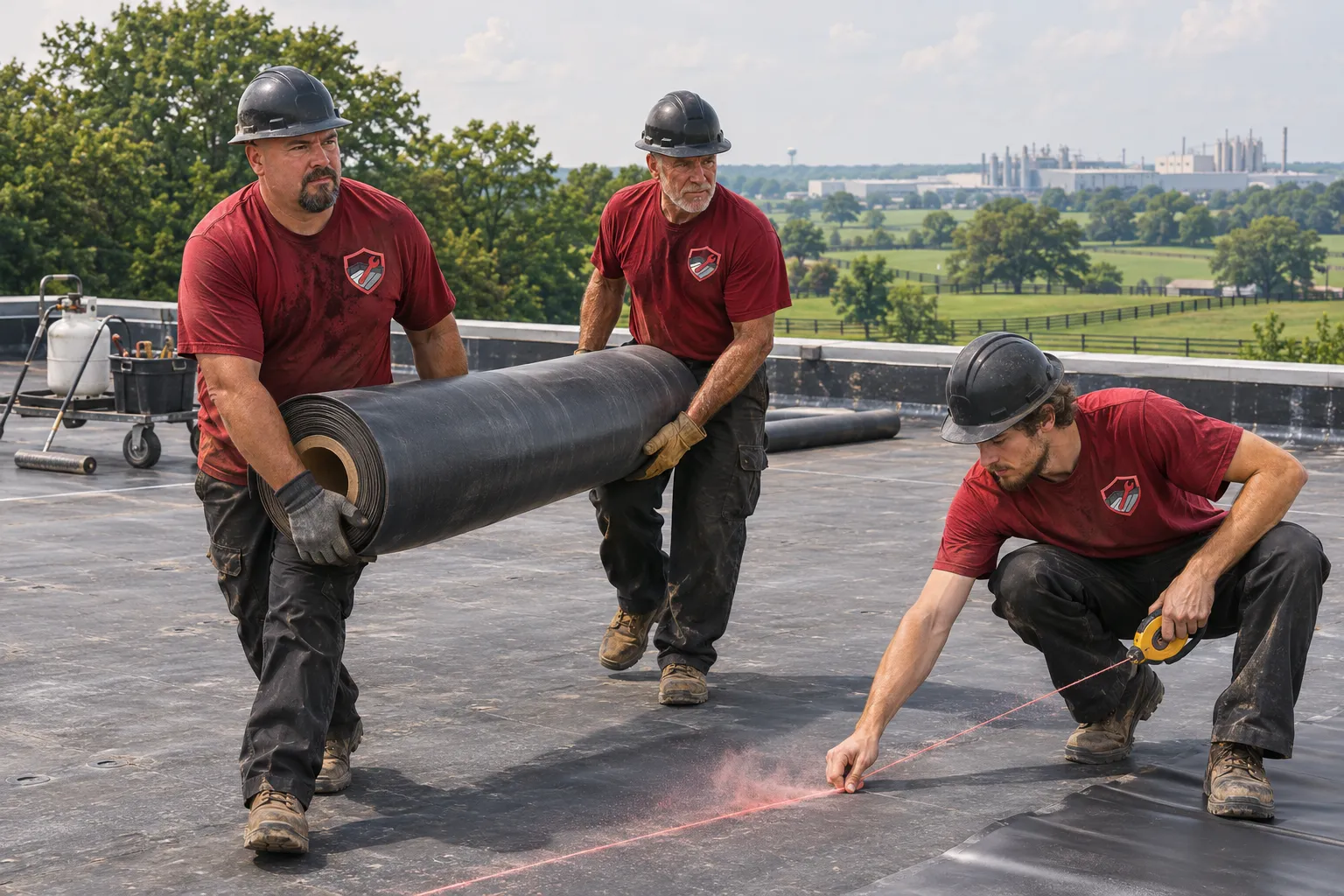
Book an inspection before the next storm pushes water under it. We patch the seam and check the curb flashing beside it.
Flat roof repairs follow a fixed order so each patch bonds and the water stops at its source.
We walk the field, seams, curbs, and drains, and match each interior stain to its spot on the membrane above.
Cores or an infrared scan show whether insulation under a leak is wet. Wet board is cut out before any patch goes down.
Patch areas get cleaned until fresh membrane shows. TPO gets a test weld first, since old chalky sheet can resist welding.
Matching membrane goes on with rounded corners, reaching clean, dry roofing on every side. Failed curb flashing is rebuilt during the same visit.
Strainers and scuppers are cleared and reset, and every patch is photographed and marked on a roof plan.
Flat roofs often share a building with other roof problems. These services cover the rest of it.
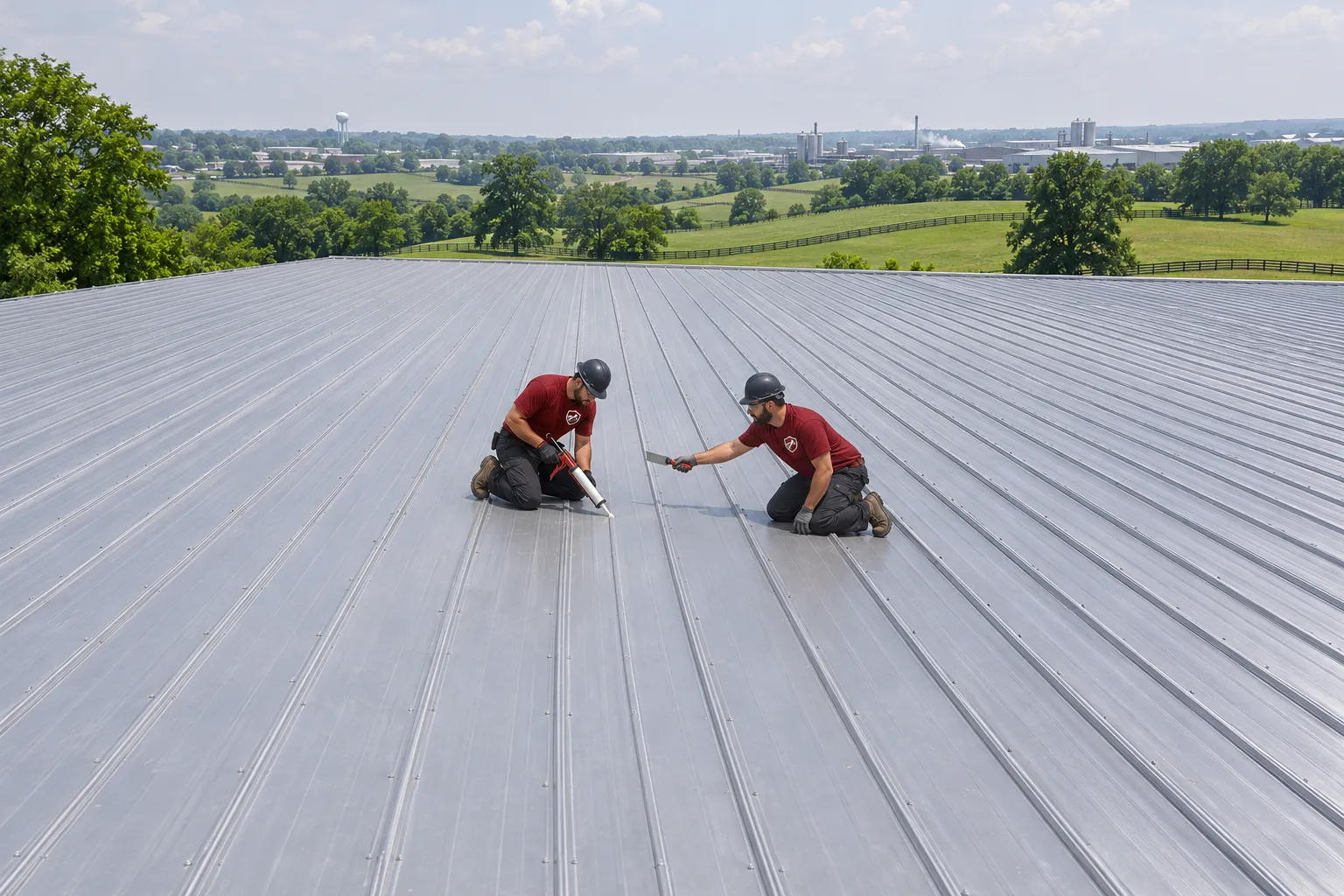
Shops and warehouses with metal sections get screw, lap, and panel repairs that match the existing profile.
Metal roof repair →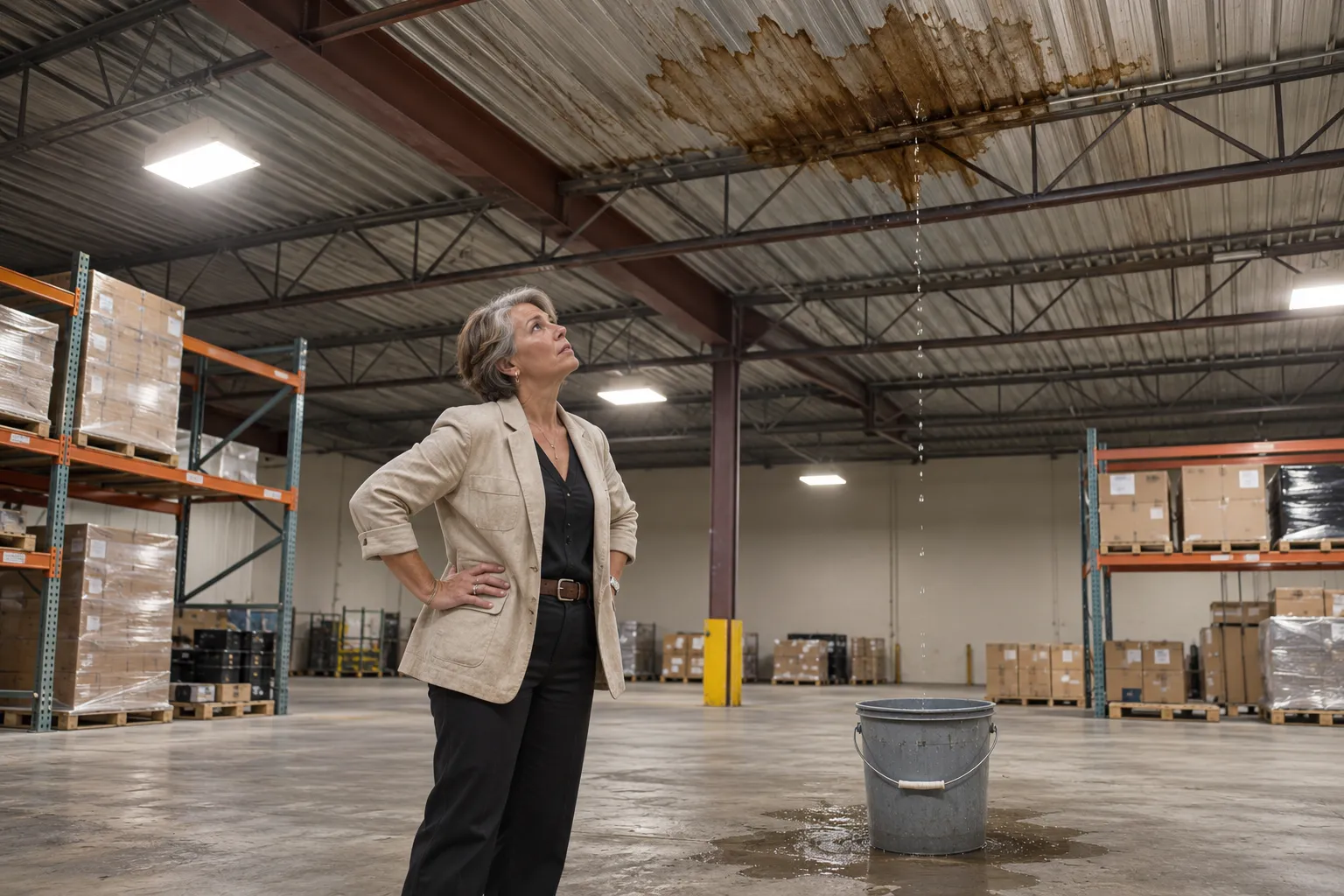
When the drip inside sits far from any visible damage, leak tracing finds the detail that is actually letting water in.
Leak repair →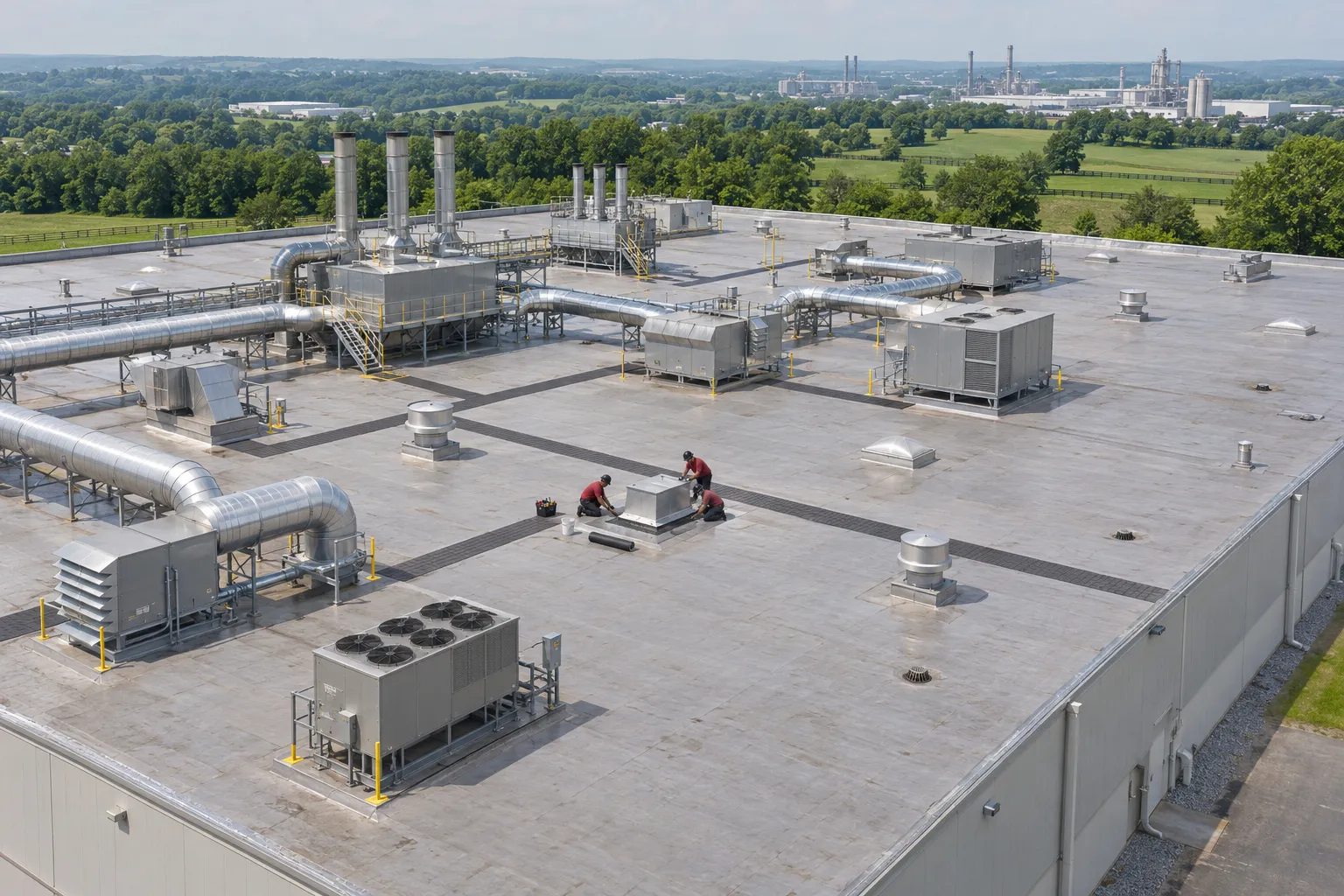
Plant roofs with exhaust fans, internal drains, and heavy foot traffic get repairs planned around production.
Industrial roof repair →Five questions owners ask about flat roof repair, answered for Georgetown roofs.
Open seams, punctures, blisters, ponding, and flashing failures at curbs and walls come up again and again. Each one leaves a sign you can see: a lifted lap edge, a small cut near a unit, a raised bubble, a dirt ring, or membrane pulling off a wall. Several of these together on an older roof push the decision toward restoration.
Seams and punctures get patched in the same membrane as the roof. On TPO and PVC that means a hot-air welded patch over cleaned, prepped sheet; on EPDM it means scrubbing, priming, and a peel-and-stick patch or new seam tape. Rounded corners resist peeling better than square ones, and a test weld shows whether old TPO still takes heat.
Only when they crack, grow, sit in a walkway, or feel soft at the edge. Firm blisters with an intact surface get marked on the roof plan and checked at the next visit. Dozens of blisters across one field usually mean moisture is trapped in the assembly, and a moisture scan confirms it before any repair plan is set.
Start by clearing what blocks the water: a clogged strainer, a buried scupper, or debris behind a curb. Low spots over a sagging deck need deck repair and tapered insulation under new membrane, and a drain set too high gets lowered or a sump added. A missing cricket behind a curb gets built in so water moves toward the drain.
Failed curb flashing is cut out so the wood nailer and insulation behind it can be checked and dried or replaced. New membrane flashing then runs up the curb and is closed at the top with a termination bar and metal counterflashing. Open seams in the curb's sheet metal get sealed during the same visit.
Tell us where the water shows inside and what membrane the roof has. We find the open seam or flashing and patch it.
Leave a name and number, or call +1 (606) 221-5686 now.