Fastener Replacement
Loose screws that still grip get driven snug with a sealant cap. Stripped holes take an oversized screw, and cracked washers mean a new screw.
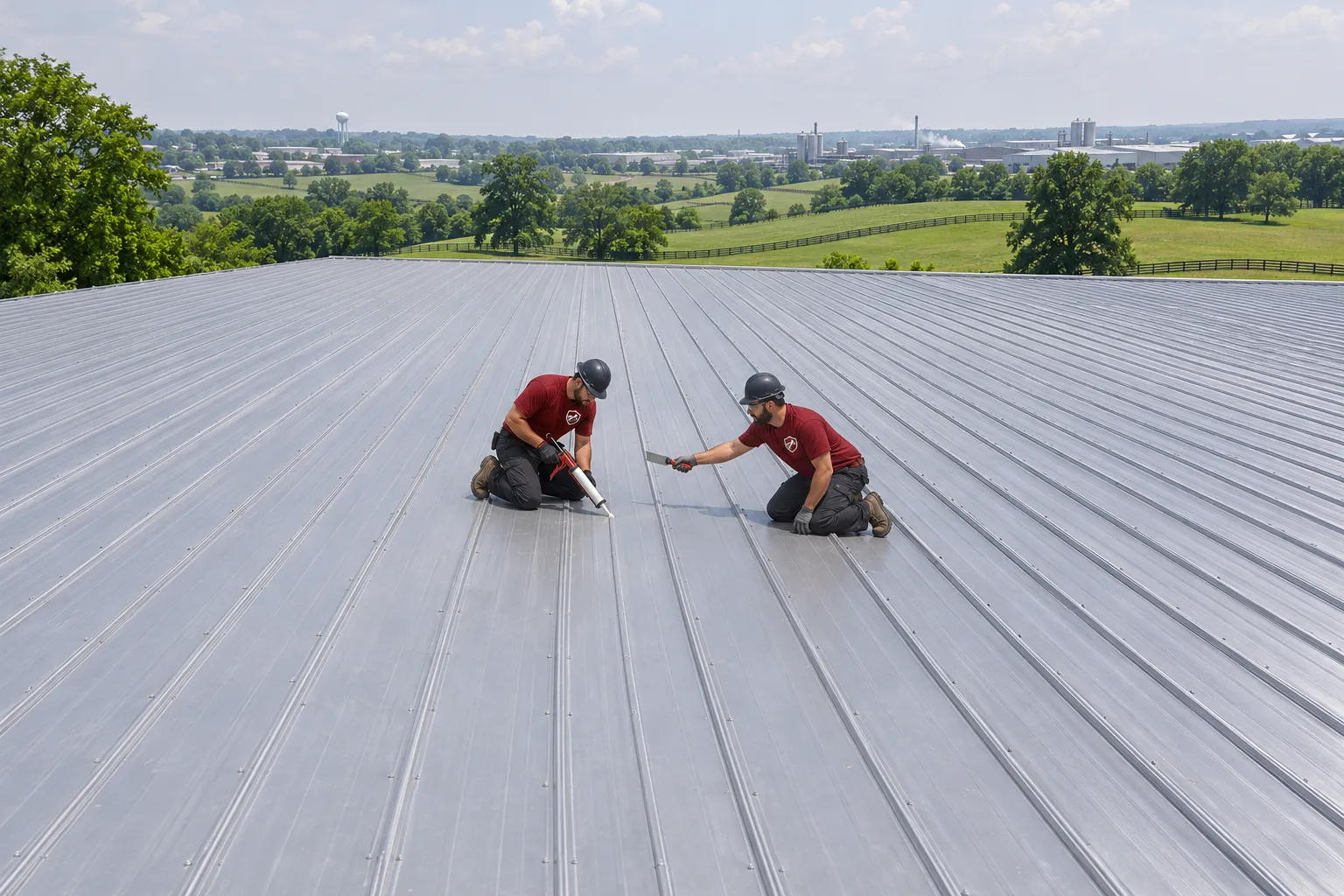
As a Georgetown commercial metal roof repair contractor, we replace failed screws, reseal laps, and patch or replace rusted panels on shops, barns, and plants.
A Georgetown commercial metal roof repair contractor looks at the steel itself before anything else. Solid panels take repairs well, and rotted ones need replacing.
| What We Check | Repair Holds | Bigger Fix Needed |
|---|---|---|
| Screws | Backed out but still gripping the purlin | Spinning in rotted steel |
| Panel rust | Surface rust on solid steel | Holes in several places or rust across the width |
| End laps | Old sealant failed, panels still sound | Lap rusted through |
| Eaves | A few panels rusting at the edge | Rust along the eave on most panels |
| Hail dents | Paint and laps intact | Cracked paint, split seams, many dents holding water |
Most metal roof leaks start at a fastener, a lap, or a piece of trim, and each leaves its own sign.
Hot and cold cycles move long panel runs and walk screws loose, most often near the ends of the run where movement is greatest.
Rust streaks running downslope from a joint show where the sealant failed and water started working under the upper panel.
Eaves and the steel under gutters stay wet longest, so corrosion shows up there before it reaches the rest of the roof.
Gutters set inside a parapet overflow into the building when their outlets clog or their seams rust open.
Missing foam closures and lifted rake trim let wind-driven rain in along the edges of the roof.
Cracked paint at the dents lets rust start, and dented low-slope panels hold water that turns into a leak later.
Metal repairs in Georgetown cover installing new parts, repairing failed joints, and keeping the roof maintained. These are the six we do most.
Loose screws that still grip get driven snug with a sealant cap. Stripped holes take an oversized screw, and cracked washers mean a new screw.
Joints get cleaned of old sealant, wire-brushed, and primed, then stitched tight and resealed with butyl tape or reinforced mastic.
One small hole in solid steel gets a matching metal patch with sealant and screws, lapped in the direction water flows.
Panels with holes in several places, or rust across their width, get replaced with new ones matching profile, rib height, and gauge.
Caps and rake trim get refastened at tighter spacing, with new foam closures where the old ones are missing.
Box gutters get resealed or lined with new hangers. Eave gutters get new end caps and cleared outlets.
Metal roofs with solid steel stay in service a long time when the screws and laps are kept up. This is how repair compares with re-roofing.
| Factor | Metal Roof Repair | New Metal Roof |
|---|---|---|
| Work area | Screws, laps, trim, or single panels | Every panel, trim piece, and closure |
| Building use | Crews work from the roof while the shop runs | Larger staging and longer weather exposure |
| Materials | Screws, butyl, matching panels | Full panel order and new trim |
| Steel condition | Solid steel with local damage | Rotted steel or rust across many panels |
| Upkeep after | Screw checks at the run ends each visit | A new roof with its own fastener schedule |
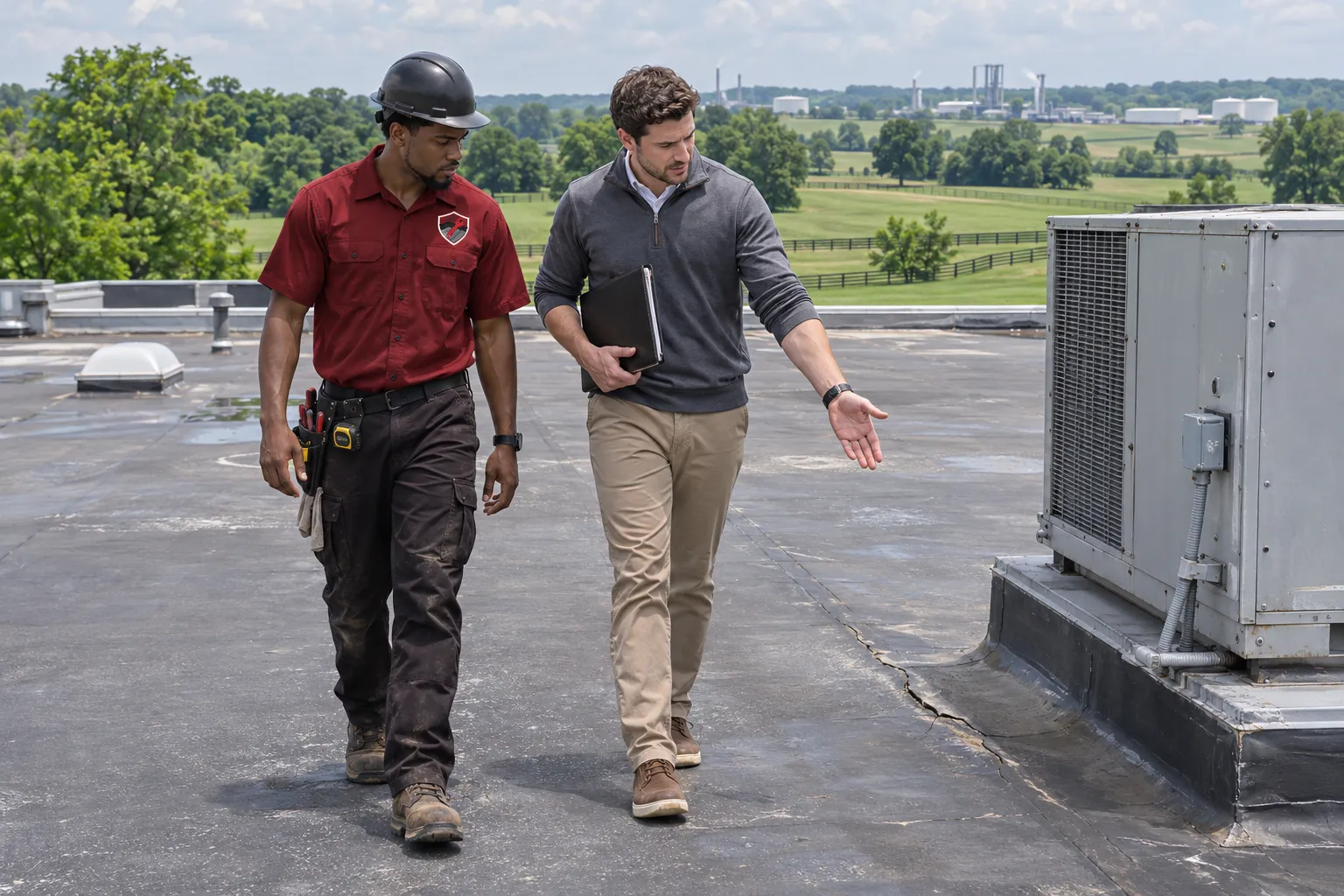
That joint has started to let water in. Book an inspection and we will reseal the lap before the steel under it rusts through.
Metal repairs go in a set order, so new parts seal against solid steel and stay tight through the seasons.
We walk the panel runs, check screws at both ends, look under gutters and along the eave, and match leaks inside to the laps above.
Each problem panel gets probed for rot. Solid steel takes screws and patches; perforated or rotted steel moves to replacement.
Laps are cleaned of old sealant, then wire-brushed and primed with a rust-inhibiting primer before anything new goes on.
New screws, stitch screws, and butyl tape or reinforced mastic close each joint. Replacement panels lap in the direction water runs.
Ridge caps and rake trim get new fasteners and closures, and every repair is photographed for the next inspection.
Many metal buildings also carry flat sections, interior leaks, or plant equipment. These services cover them.
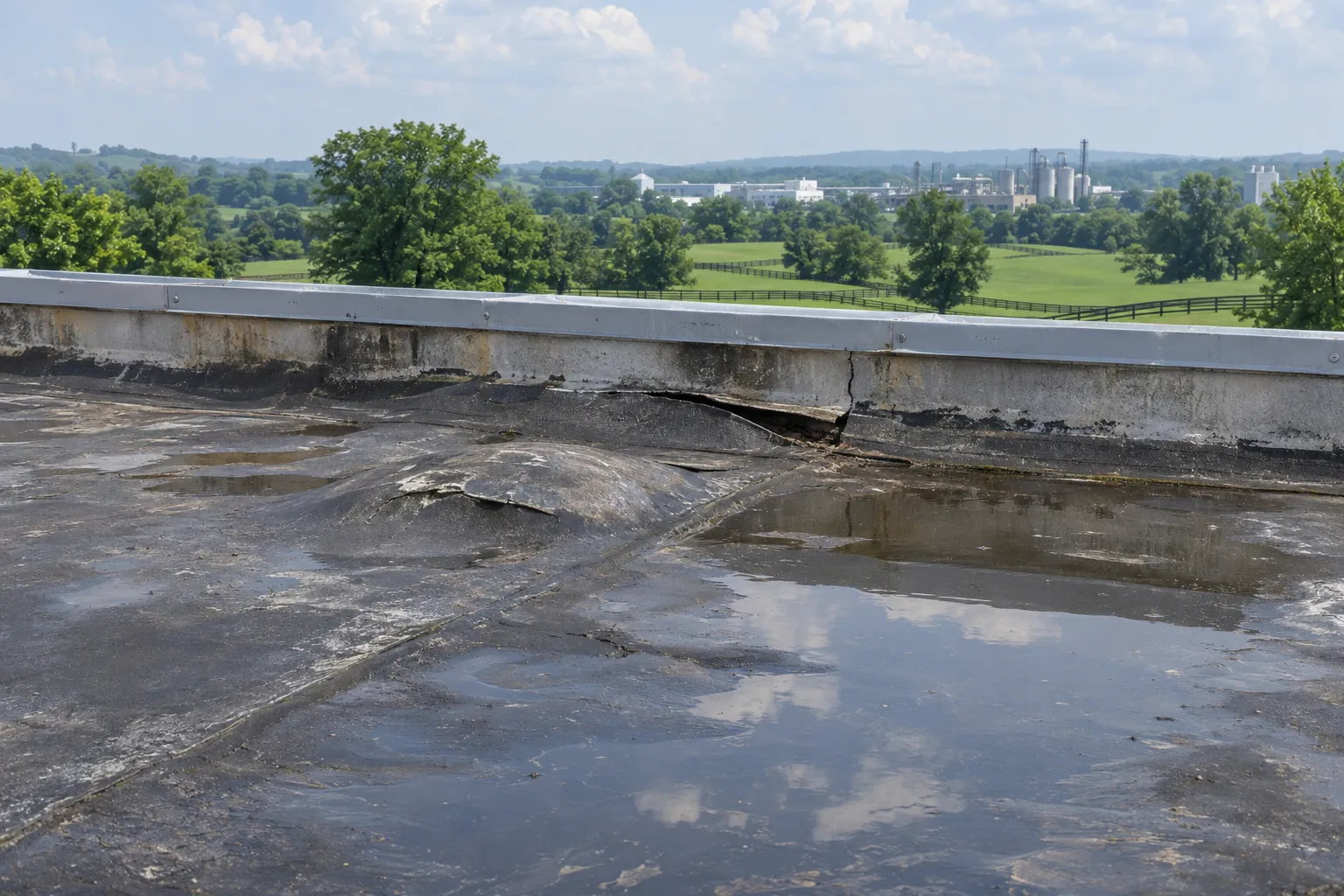
Low-slope additions and office sections often carry TPO or EPDM that needs its own seam and flashing work.
Flat roof repair →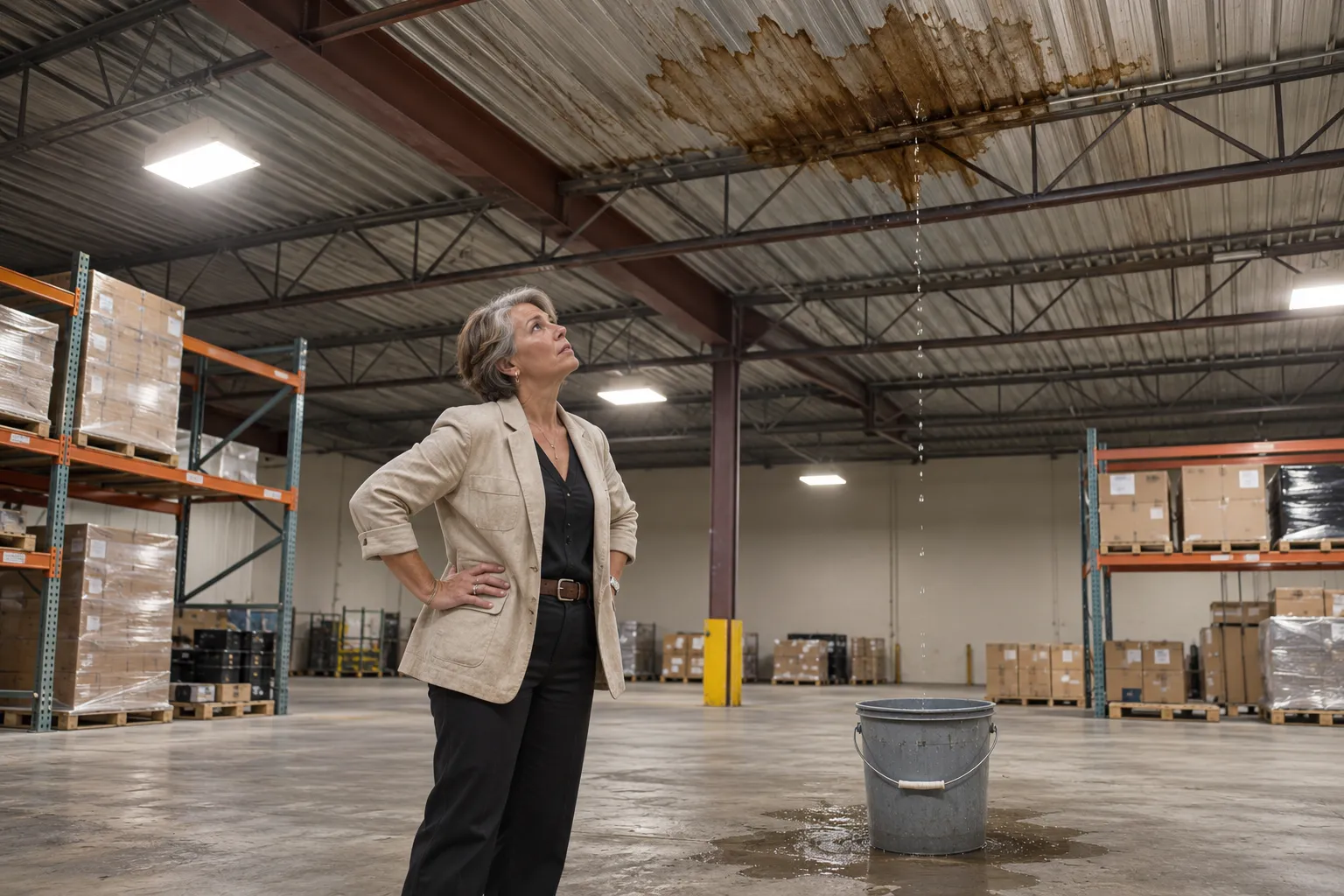
Drips that travel along purlins can land far from the lap that is failing, so tracing comes before the fix.
Leak repair →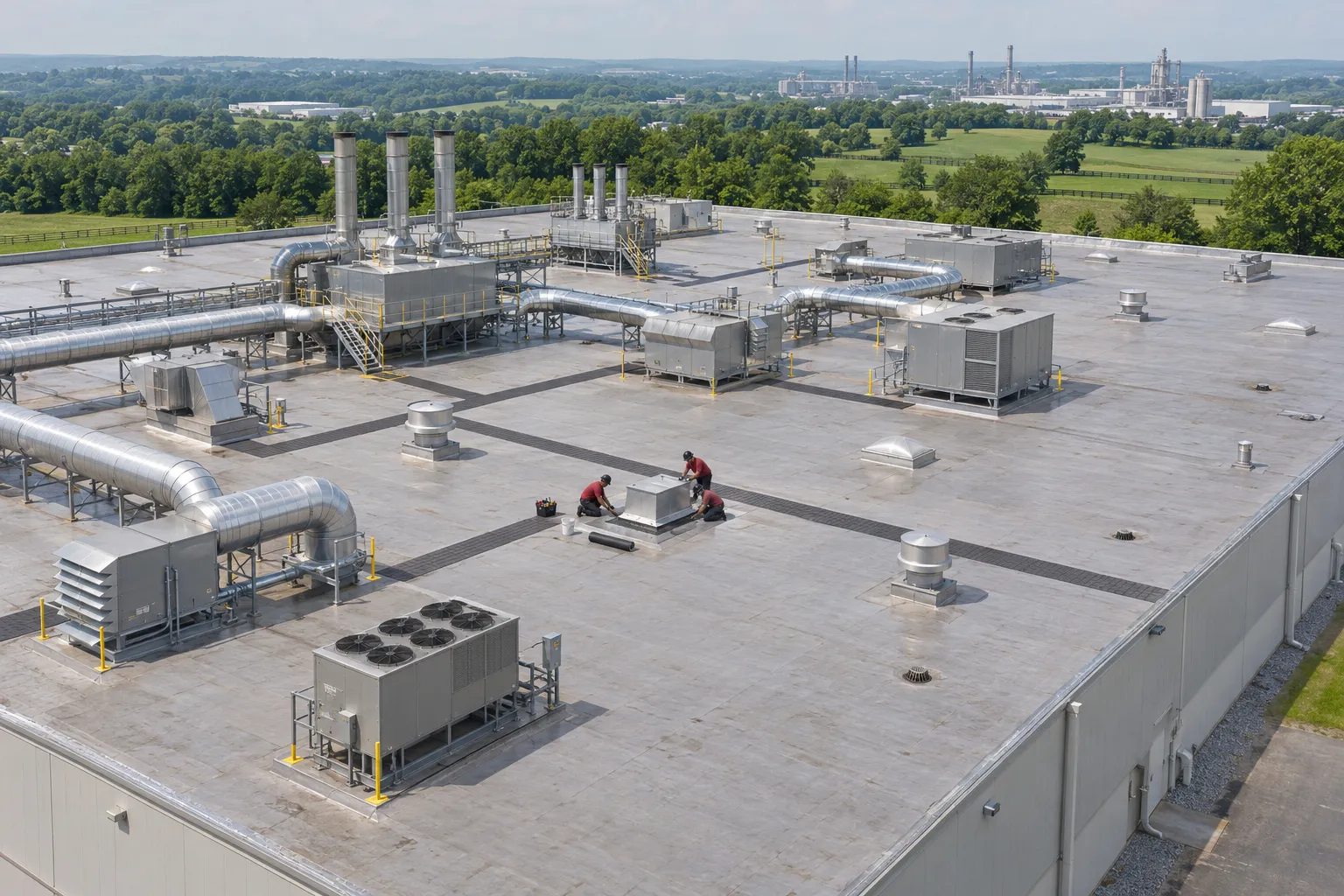
Plant buildings with metal roofs get repairs scheduled around production, exhaust, and lockout.
Industrial roof repair →Five metal roof questions owners ask, answered for the shops and plants around Georgetown.
Screws leak once their washers dry out or the screw backs out of the purlin after years of panels moving with the temperature. A screw that still grips gets driven snug and capped, a stripped hole takes an oversized screw, and a cracked washer or rusted head means a new screw with a fresh washer.
Old sealant comes out of the joint, rust gets wire-brushed and primed, and stitch screws pull the panels tight so they stop shifting. Butyl tape or a fabric-reinforced mastic then seals the lap. A lap that has rusted through gets cut back and patched with new metal of the same gauge and profile.
Patch when the hole is small and the steel around it is solid. Replace the panel when it is perforated in several places, rust runs across its width, or screws spin in rotted steel. New panels must match the profile, rib height, and gauge of the old ones, or the laps will leak.
Yes, when the dents are cosmetic and the paint and laps hold. Cracked paint, split seams, and broken skylights need prompt work, and dented low-slope panels that hold water become leak spots later. Insurance carriers usually want dated photos first. Roofs dented across most panels often call for new panels or a new roof over the old one.
Gutters, ridge caps, and trim get resealed at their joints, rusted sections replaced, and loose pieces refastened with new screws and closures. Box gutters inside a parapet get their outlets and overflow scuppers checked every visit, since a backup there spills into the building. Rake trim lifted by wind goes back on at tighter fastener spacing.
Tell us where the roof leaks and what kind of panels it has. We check the screws and laps and fix the joint that failed.
Leave a name and number, or call +1 (606) 221-5686 now.