Ridge Cap Refastening
Caps get new screws and foam closures, and bent sections get replaced with ridge pieces matching the panel profile.

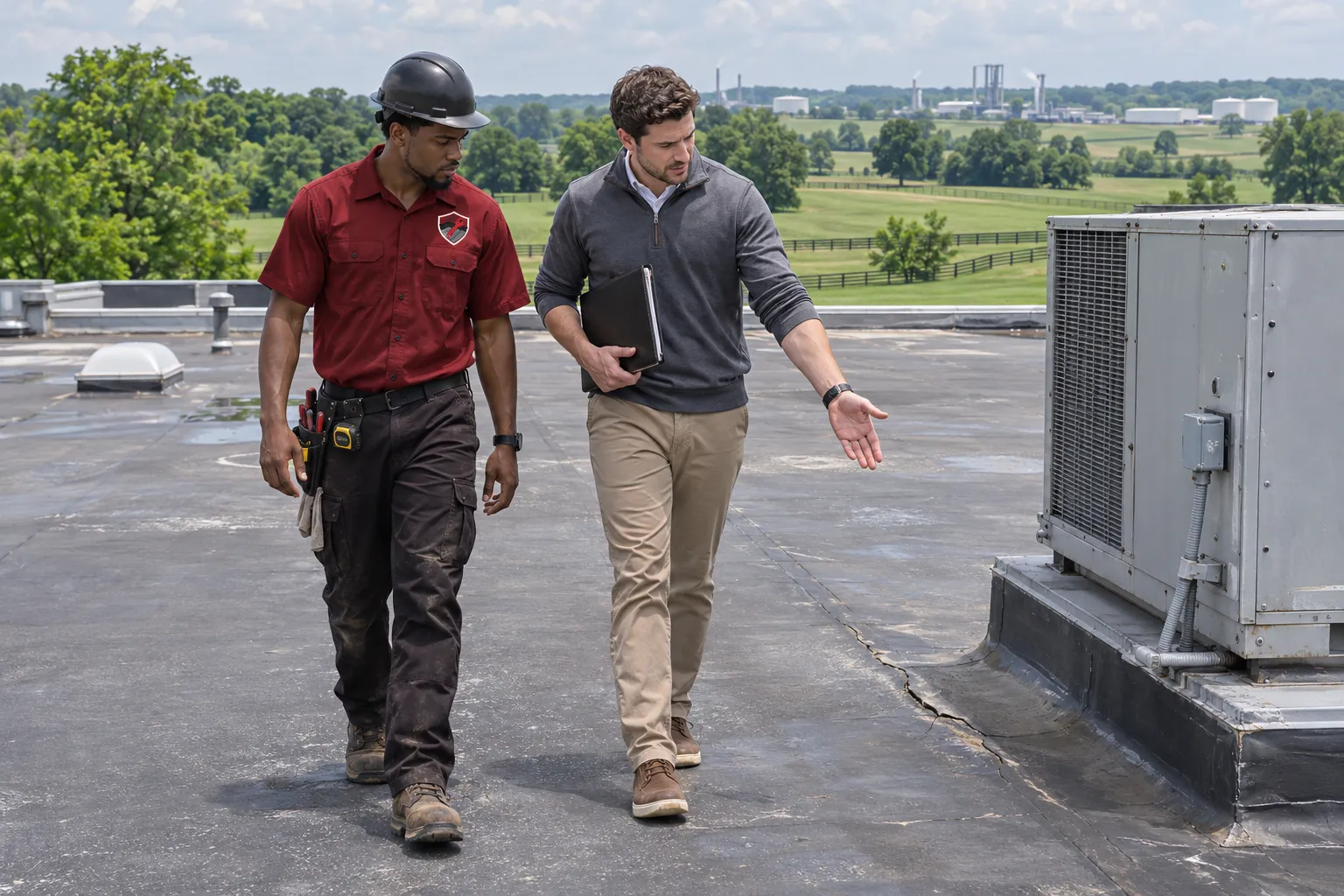
As a Williamstown commercial roof repair contractor, we repair storm damage on metal buildings and flat roofs, from lifted trim to cracked skylights and open seams.
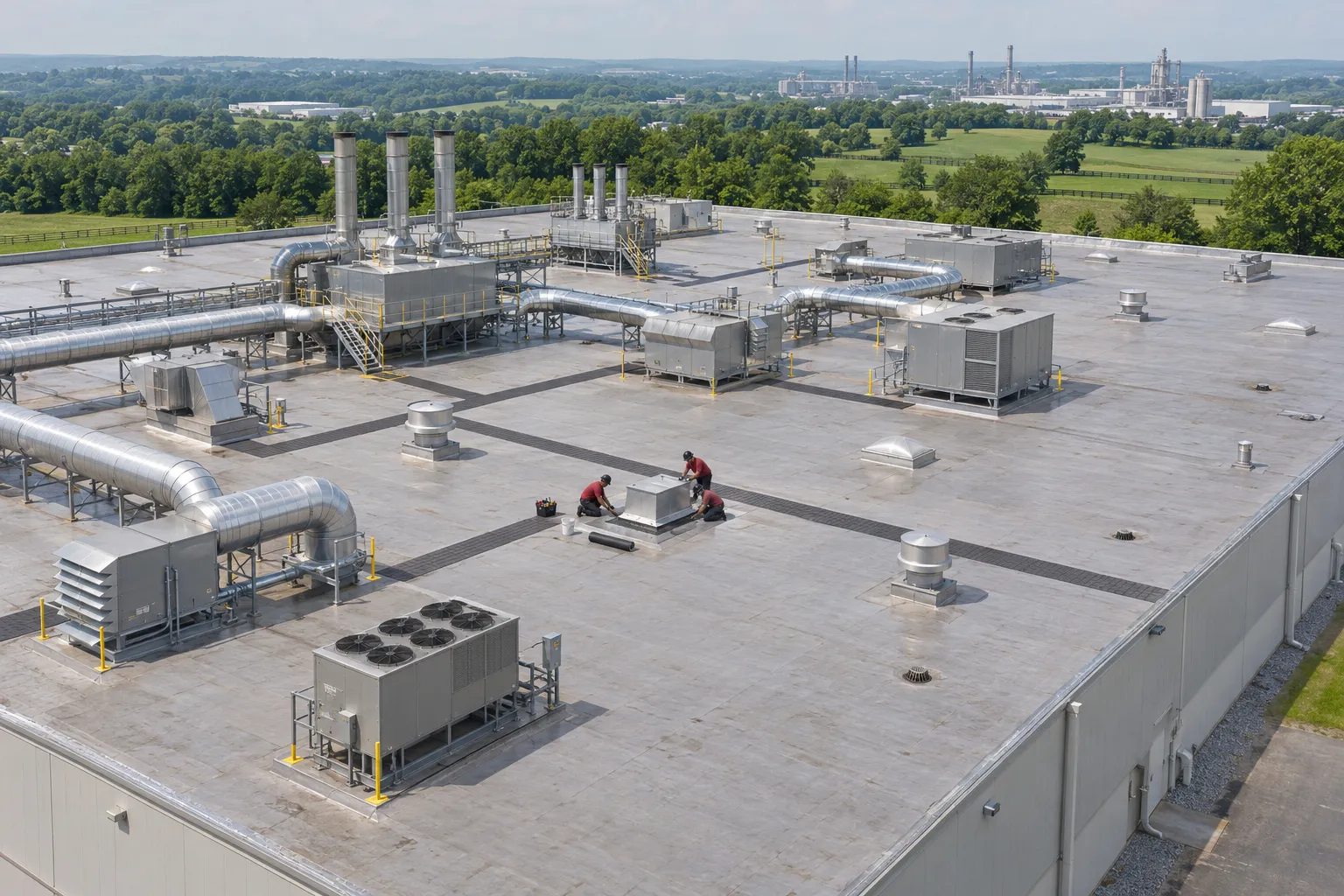
Williamstown falls under NWS Wilmington, Ohio, for forecasts and warnings, while Georgetown is covered by NWS Louisville. A Williamstown commercial roof repair contractor follows the Wilmington forecast for rain and wind before opening any roof in Grant County.
After a storm, the work centers on what wind lifts and what debris blocks: ridge caps and rake trim on metal buildings, seams along the windward edge, and gutters packed with leaves and limbs.
Check these after high wind or a hard rain, or have us walk the roof with you.
Wind catches the ridge first. Missing foam closures and backed-out screws let rain blow in along the peak of a metal building.
Trim along the gable edge lifts in gusts and leaves the panel edge open to sideways rain.
Membrane seams along the roof edge facing the storm take the most wind lift and open first.
Leaves and limbs blown onto the roof clog gutters and downspouts, backing water up under the eave.
Hail and flying debris crack skylight panels and split the rubber boots around vent pipes.
Storm damage usually hits edges, trim, and penetrations while the field holds up. This is how a repair compares with replacing the roof.
| Factor | Storm Repair | Replacement |
|---|---|---|
| Usual damage | Trim, caps, edge seams, skylights | Damage across most of the field |
| First response | Temporary patch, then a permanent repair once dry | Full tear-off after the weather clears |
| Insurance photos | Dated photos of each damaged detail | Photos of the whole roof |
| Building use | Work stays at the edges and penetrations | Larger staging around the building |
| When it fits | Field panels and membrane still intact | Wet insulation or widespread punctures |
These repairs cover most of the storm calls we take for Williamstown shops, warehouses, and offices.
Caps get new screws and foam closures, and bent sections get replaced with ridge pieces matching the panel profile.
Lifted trim goes back on at tighter fastener spacing, so the next gust along the gable has less to grab.
Wind-opened seams along the perimeter get cleaned and patched in matching membrane, with the edge metal refastened.
Cracked or punched-through panels get swapped, and the curb flashing around each skylight gets resealed.
Split boots around vent pipes get replaced and flashed into the roof, whether the roof is membrane or metal.
Debris comes out, outlets get checked, and dented gutters that hold water get replaced.
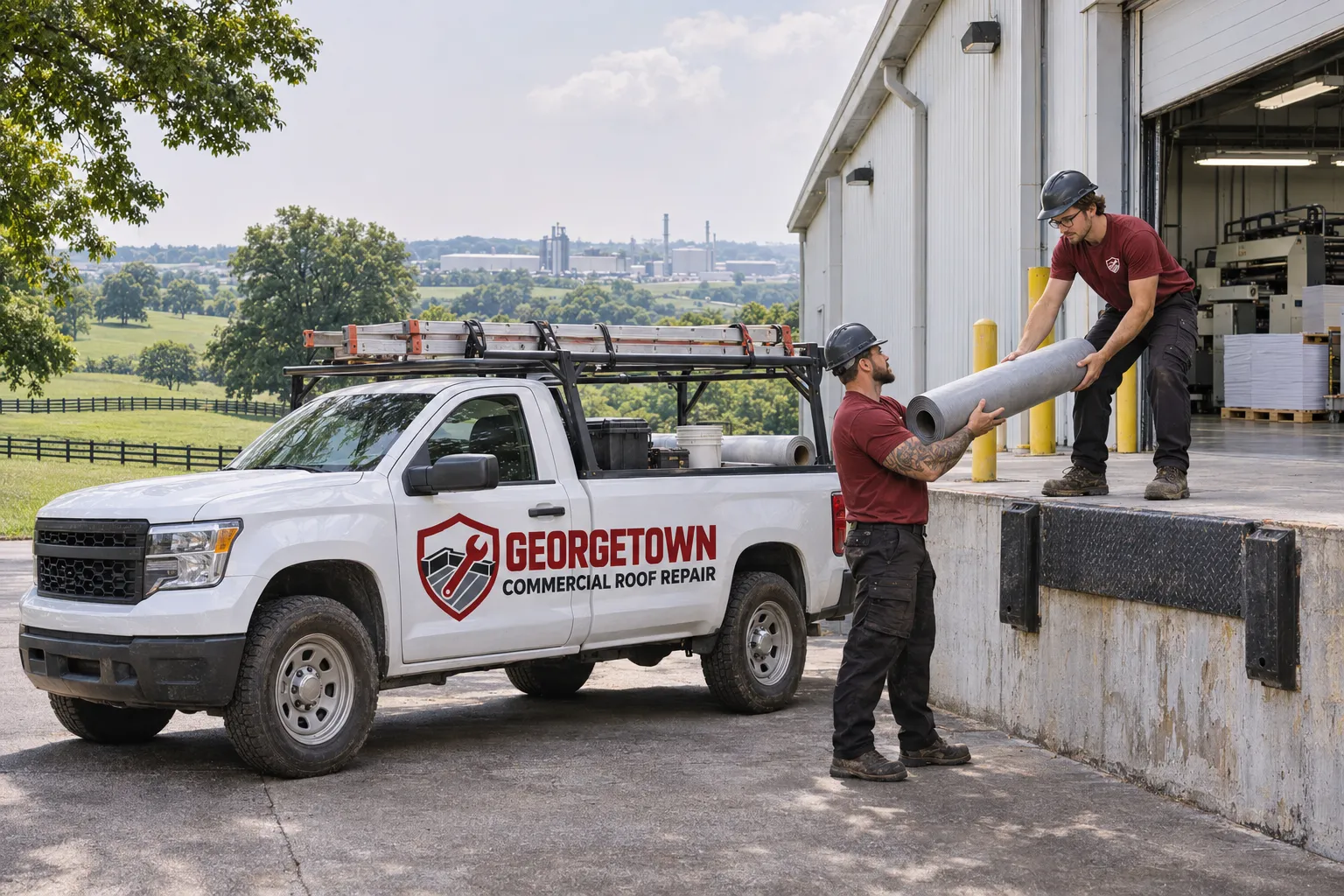
Open edges let the next rain straight in. Book an inspection and we refasten the trim and check the seams beside it.
Storm calls follow the weather. We patch first if rain is coming, then make the permanent repair on a dry day.
We walk the windward edge, ridge, and rake first, then the gutters, skylights, and boots, photographing every damaged detail with the date.
NWS Wilmington's forecast decides the timing. If more rain is due, open spots get a temporary wet-surface patch right away.
Gutters, downspouts, and drains get cleared of limbs and leaves so water leaves the roof while repairs are lined up.
Trim and caps are refastened, seams patched, and skylights or boots replaced once the surfaces are dry enough to bond.
You get dated photos of each damaged roof detail and its repair, the record insurance carriers usually ask for.
Shops, plants, and farm buildings in these towns get the same storm repair work as Williamstown. Elsewhere? Call us or send us a message.
Scott County. Where most of our flat, metal, and plant roof repairs start.
Questions owners ask after wind and rain around Williamstown.
Williamstown sits under NWS Wilmington, Ohio, for forecasts and warnings, while Georgetown and Lexington fall under NWS Louisville. Repair work in Grant County follows the Wilmington forecast for rain and wind before any roof gets opened, so a temporary patch goes on first when more weather is on the way.
Larger repairs that need a permit go to the Grant County local building inspector, whose office the state lists in Williamstown. Corinth addresses should confirm their county first, since the area reaches into neighboring counties. City addresses should also ask whether Williamstown has its own process before work starts.
Start at the ridge caps and rake trim, since wind catches them first, then look along side laps on the windward side for lifted edges. Caps get new screws and foam closures, bent pieces get replaced, and screws that backed out get swapped. Dated photos taken before any cleanup help an insurance claim.
A cracked or punched-through skylight panel gets replaced, and the curb flashing around it gets checked and resealed during the same visit. Split pipe boots are cut out and replaced with new boots flashed into the roof. Until a new panel arrives, a temporary cover keeps rain out of the building.
Yes. Take dated photos of each damaged spot first, then a temporary patch keeps water out of the insulation while the claim moves forward. Temporary patches get marked on a roof plan so each one is replaced with a permanent repair once the roof is dry.
Tell us what the storm damaged and what kind of roof the building has. We walk it, patch what is open, and repair it.
Leave a name and number, or call +1 (606) 221-5686 now.