Chemical-Resistant Patches
Grease-damaged membrane near kitchen or process exhaust gets cut out and patched in a chemical-resistant material, with grease containment added.
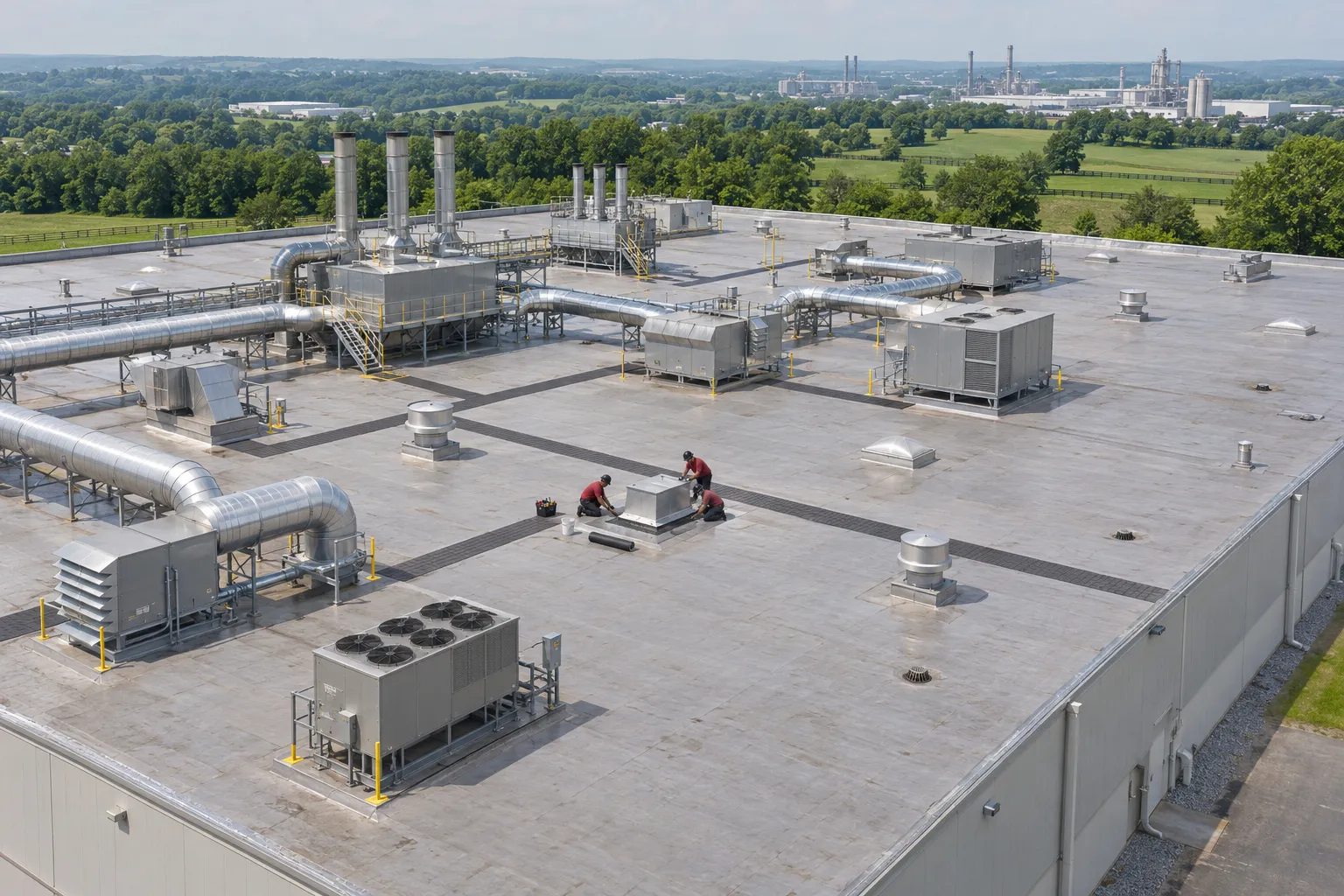
As a Georgetown industrial roof repair contractor, we repair plant and warehouse roofs around production schedules, hot work rules, and rooftop equipment.
A Georgetown industrial roof repair contractor weighs how far damage has spread across a big roof before choosing repair, restoration, or replacement.
| What We Check | Repair Holds | Bigger Fix Needed |
|---|---|---|
| Exhaust damage | Soft or brittle membrane near one fan | Damage spread across many discharge areas |
| Drains | One backed-up line or broken strainer | Ponding across wide roof sections |
| Seams | Open near traffic routes | Aging across the whole field |
| Insulation | Mostly dry, confirmed by survey | Wet over much of the field |
| Past patches | Recent and still holding | Years of patches spread everywhere |
Plant roofs carry equipment, exhaust, and maintenance traffic. These conditions turn up on them most.
Grease and oil mist swell some membranes until their seams fail, and the damage stays close to the discharge.
Steam and hot exhaust bake the membrane around stacks until it cracks or blisters.
One backed-up line on a big roof can flood a wide area in a single storm.
Paths from the hatch to rooftop units collect punctures, crushed cover board, and worn surface.
Covers between building additions split as each section moves on its own schedule.
Process dust clogs strainers and wears the membrane where water carries it.
Industrial repairs in Georgetown are matched to what each fan discharges and how crews move across the roof.
Grease-damaged membrane near kitchen or process exhaust gets cut out and patched in a chemical-resistant material, with grease containment added.
Membrane around steam and hot-air discharge gets heat-resistant flashing and a metal shield over the worst spots.
Clamp ring bolts get replaced, strainer domes swapped, membrane rewelded at the bowl, and scupper corners resealed.
Patched traffic routes get welded or adhered walkway pads, so maintenance crews stay on a protected path.
Crushed board between the hatch and the units is cut out and replaced before the membrane over it is patched.
Split covers between additions get new cover material that lets each section move without tearing the roof.
Plant roofs are big, so repair keeps most of the roof working while only the damaged areas get opened. This is how that compares with replacement.
| Factor | Industrial Repair | Roof Replacement |
|---|---|---|
| Production | One repair area opened and closed per shift | Long staging over working lines |
| Hot work | Short permits for each repair area | Extended permits across the roof |
| Equipment | Lockout of units next to the repair only | Lockout of many units in sequence |
| Debris | Controlled at each patch over clean areas | Tear-off debris across the whole roof |
| When it fits | Damage near fans, drains, and routes | Wet insulation across much of the field |
One clogged line can flood a wide roof area in a single storm. Book an inspection and we will clear it and reset the drain.
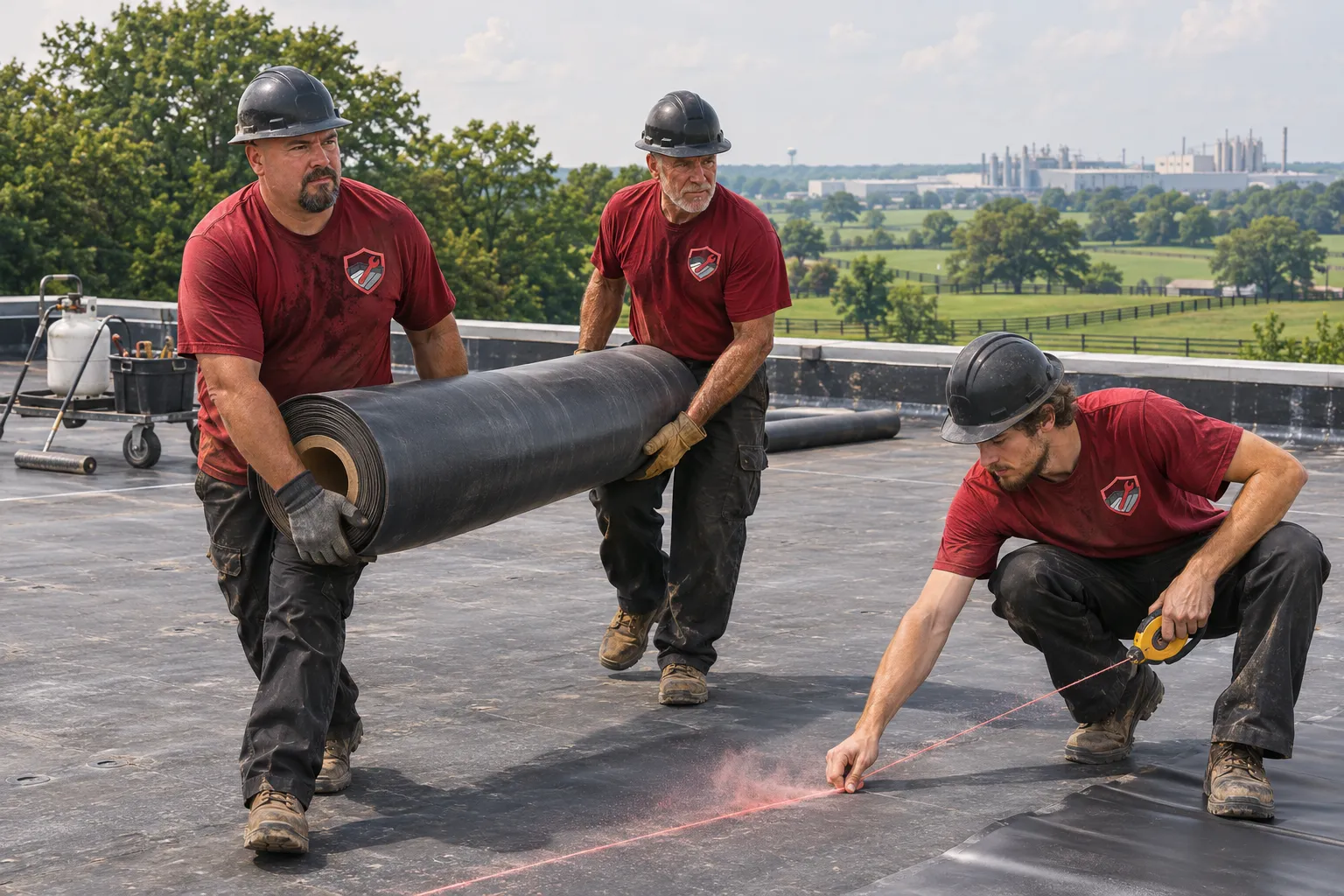
Plant repairs follow the plant's own safety rules, and each repair area is opened and closed in one shift.
We walk the roof with the maintenance lead, numbering drains, curbs, and sections on a roof map, and asking what each fan discharges.
Plant safety staff set the rules for hot work on the roof, fall protection at the edges, and lockout of rooftop units before the first cut.
Debris control goes in under the roof deck over clean areas, food lines, or electronics, and crew routes stay clear of forklifts and docks.
Each repair area of membrane or panel is opened, fixed in matching material, and closed in the same shift, so no section sits open overnight.
Finished repairs, cleared drains, and new walkway pads are marked on the roof map for the next call.
Big buildings often mix roof systems. These services cover the other sections.
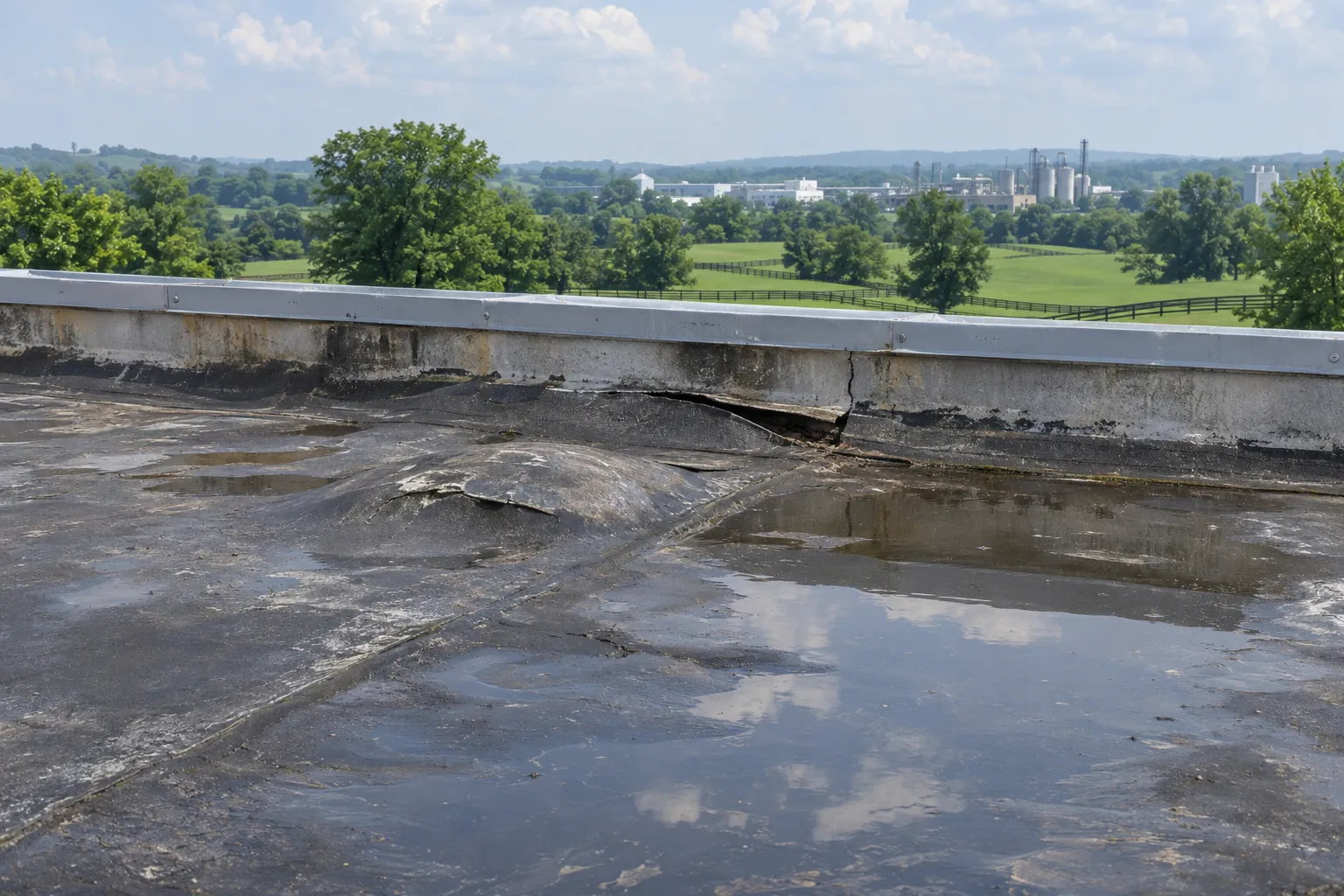
Office and dock areas with TPO, EPDM, or built-up roofs get seam, blister, and flashing repairs.
Flat roof repair →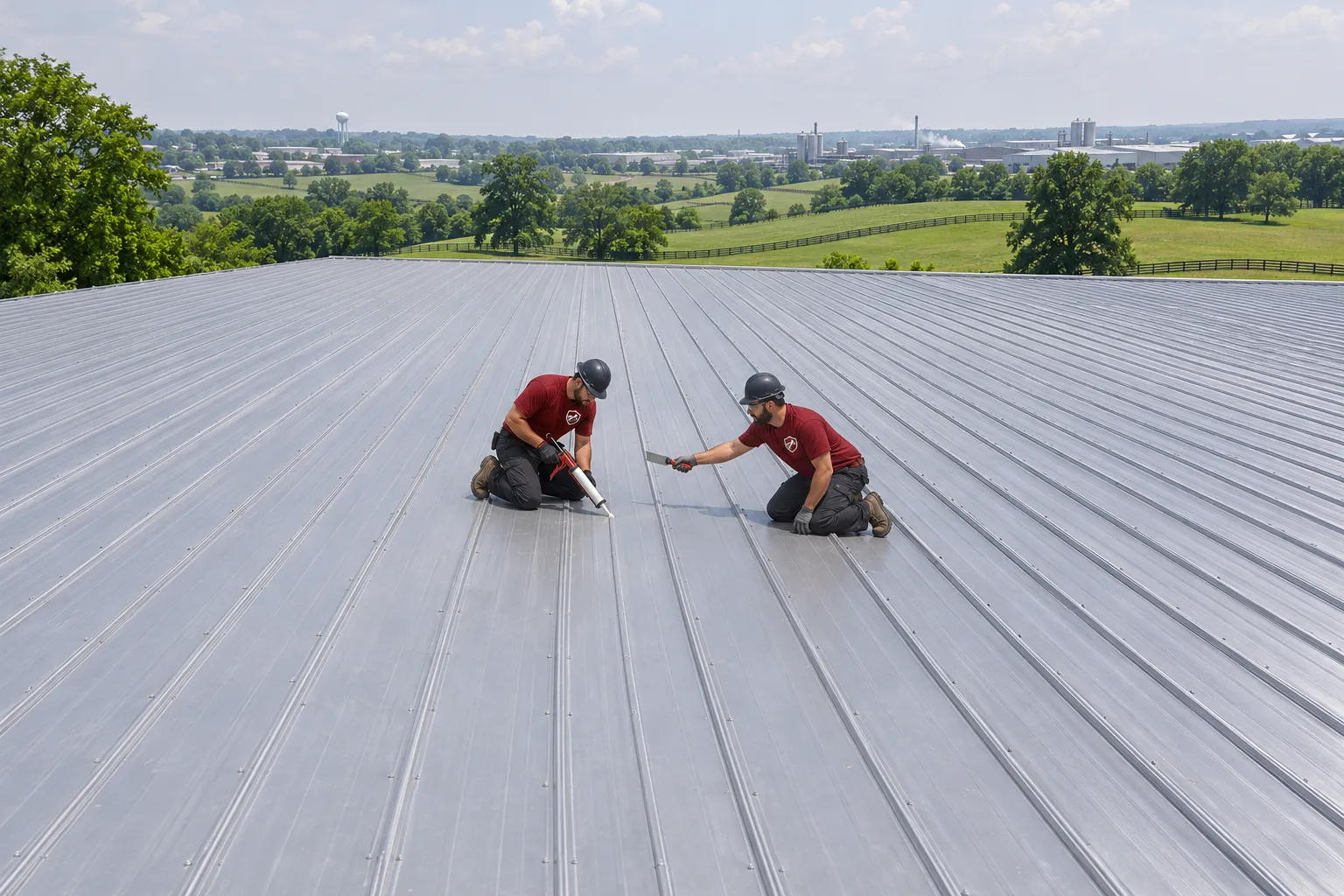
Steel warehouses and additions get screw, lap, gutter, and panel repairs in matching profile.
Metal roof repair →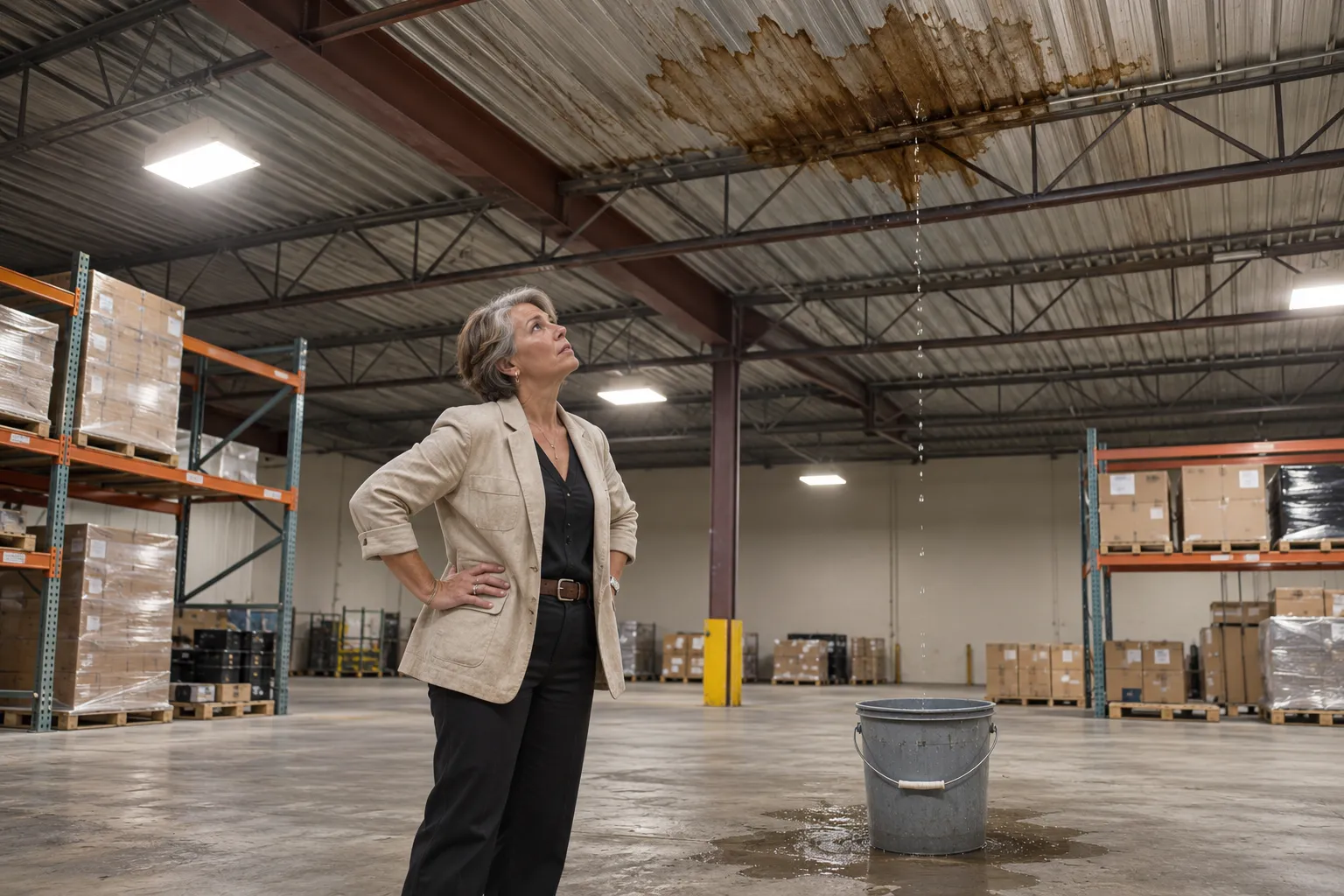
Long leak paths on big roofs get traced from the stain inside to the detail above.
Leak repair →Five plant roof questions, answered for industrial buildings around Georgetown.
Repairs are scheduled around production, safety rules, and rooftop equipment, and each repair area opens and closes in one shift. The plan covers a hot work permit for heat guns and torches, lockout of fans next to the repair, debris control over clean areas, and crew routes clear of forklifts. A maintenance lead points out live lines first.
Grease swells and softens some membranes, oil mist leaves a gummy stained surface, and steam or hot air turns roofing brittle or blistered. Dust and grit clog drains and wear the surface. The damage stays near the discharge, which keeps most repairs local, but the patch material has to match what each fan puts out.
Drain work clears the line, replaces clamp ring bolts and cracked strainer domes, and rewelds or resets the membrane into the drain bowl. Scupper boxes get resealed at their corners and outlet joints, and overflow drains get cleared. On roofs with internal drains, every drain gets checked each visit, because one backed-up line floods a wide area.
Punctures, crushed insulation, and worn membrane along routes to equipment get patched, and that path then gets walkway pads. Crushed cover board under the membrane is cut out and replaced before the patch goes on. Dented metal panels near units get a panel patch or replacement. Marked walkways keep crews on a protected path afterward.
Restoration fits once repairs are spread across the whole field while the insulation stays mostly dry. Signs pointing that way are seams aging roof-wide, many old patches, and wide surface wear. A moisture survey confirms the dry area and marks wet sections for replacement first. When wet insulation covers much of the field, replacement takes over.
Tell us what runs under the roof and what the fans discharge. We plan the repair around production and fix it section by section.
Leave a name and number, or call +1 (606) 221-5686 now.