Seam And Lap Repair
Open membrane seams get welded or taped patches; metal laps get cleaned, stitched, and resealed with butyl.


As a Georgetown commercial roof leak repair contractor, we trace each leak from the stain inside to the detail on the roof that lets water in.
A Georgetown commercial roof leak repair contractor sorts leaks into ones a single repair stops and ones that point to a wider roof problem.
| What We Check | Spot Repair Works | Wider Problem Likely |
|---|---|---|
| Leak pattern | Same spot every heavy rain | New spots each month |
| Source | One seam, boot, curb, or drain | Many details failing at once |
| Insulation | Wet only near the leak | Wet across large sections |
| Timing | Leaks during wind-driven rain only | Leaks for days after every rain |
| Past repairs | First leak at this detail | The same spot patched again and again |
Leaks show up where the roof meets something else. These are the signs that point to each source.
Water rides along deck flutes and purlins before it falls, so the drip often lands well away from the opening above.
Sideways rain gets pushed under counterflashing, coping joints, and side laps that handle normal rain fine.
Undersized or clogged drains back water up against flashing until it tops the edge.
Ice at gutters and water ponding behind parapets find laps and flashing that stay dry in summer.
Insulation soaked by an old leak keeps releasing water long after the roof itself is dry.
Filler inside a pitch pan shrinks and pulls off the metal, opening a gap around steel supports or cables.
Once the source is found, the repair depends on what failed. These six cover most leaks we trace in Georgetown.
Open membrane seams get welded or taped patches; metal laps get cleaned, stitched, and resealed with butyl.
Flashing that pulled off a rooftop unit curb or parapet is cut out and rebuilt up to a termination bar.
Clamp rings, strainers, and the membrane into the drain bowl get reset so water leaves the roof again.
Pans get cleaned and refilled with pourable sealer, replaced, or swapped for a pre-formed boot or hooded curb.
Cracked skylight panels and split pipe boots get replaced, and their flashing gets sealed to the roof around them.
Wet-surface mastic or tape slows an active leak, then a permanent repair follows once the roof dries.
Fixing the one detail that leaks keeps the rest of the roof working. This is how a traced repair compares with replacing the roof over a leak.
| Factor | Traced Leak Repair | Replacing The Roof |
|---|---|---|
| Starting point | The interior stain, measured against the roof | The whole roof area |
| Work area | The detail that failed plus wet insulation around it | Every square foot down to the deck |
| Inside the building | Stock moved or tarped under one spot | Protection across the full floor |
| When it fits | One or two sources with dry insulation elsewhere | Wet insulation across much of the field |
| Record kept | Leak dates, weather, and the fixed detail | A new roof plan from scratch |
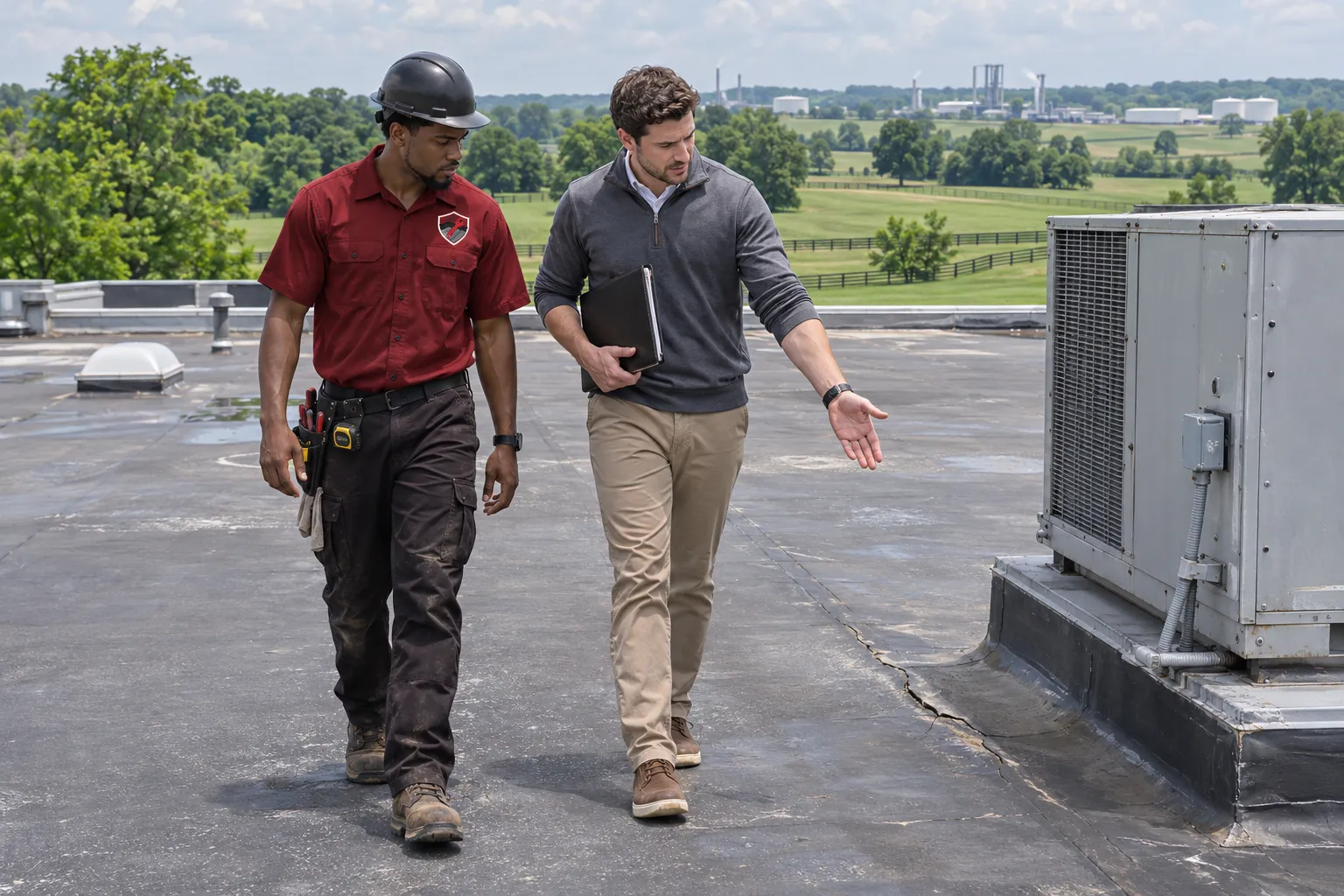
Move what you can, set a bucket, and book an inspection. Note when it leaks and which way the wind was blowing.
Leak tracing goes in a set order so one source is never mistaken for another.
We mark the interior stain or drip, measure it from walls or columns, and find the matching spot on the roof above.
Seams, flashings, drains, and penetrations upslope of that spot get checked first, since water travels before it drips.
Suspect spots get water-tested one by one, starting low, so a leak at a curb is never blamed on the seam beside it.
Infrared or moisture meters show how far water has spread under the membrane. Wet sections are cut out and replaced.
The failed detail is fixed in matching material, then the date, weather, and repair go into the roof record.
Once the source is known, the fix usually falls under one of these services.
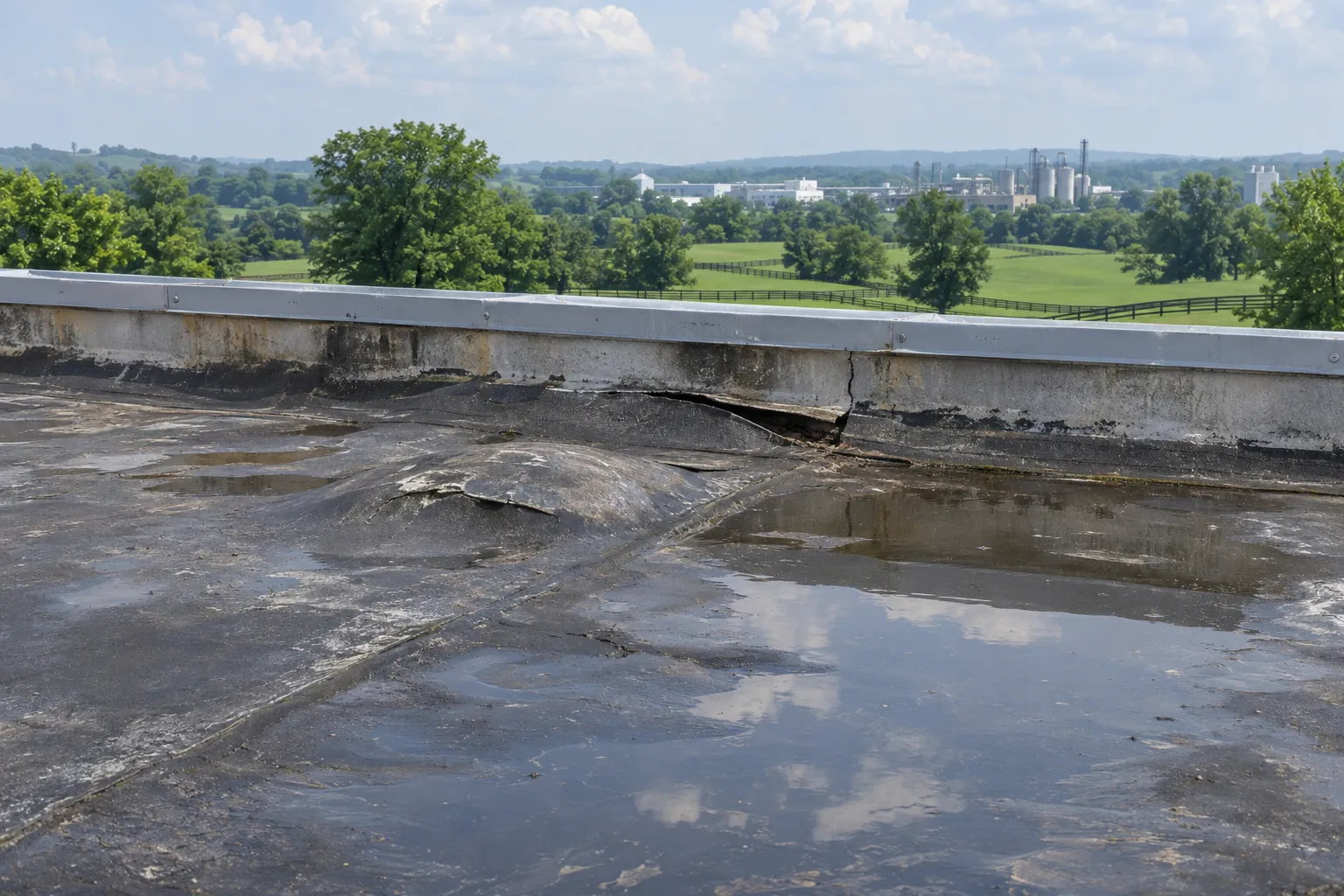
Open seams, blisters, and curb flashing on TPO, EPDM, and built-up roofs are the most common sources we find.
Flat roof repair →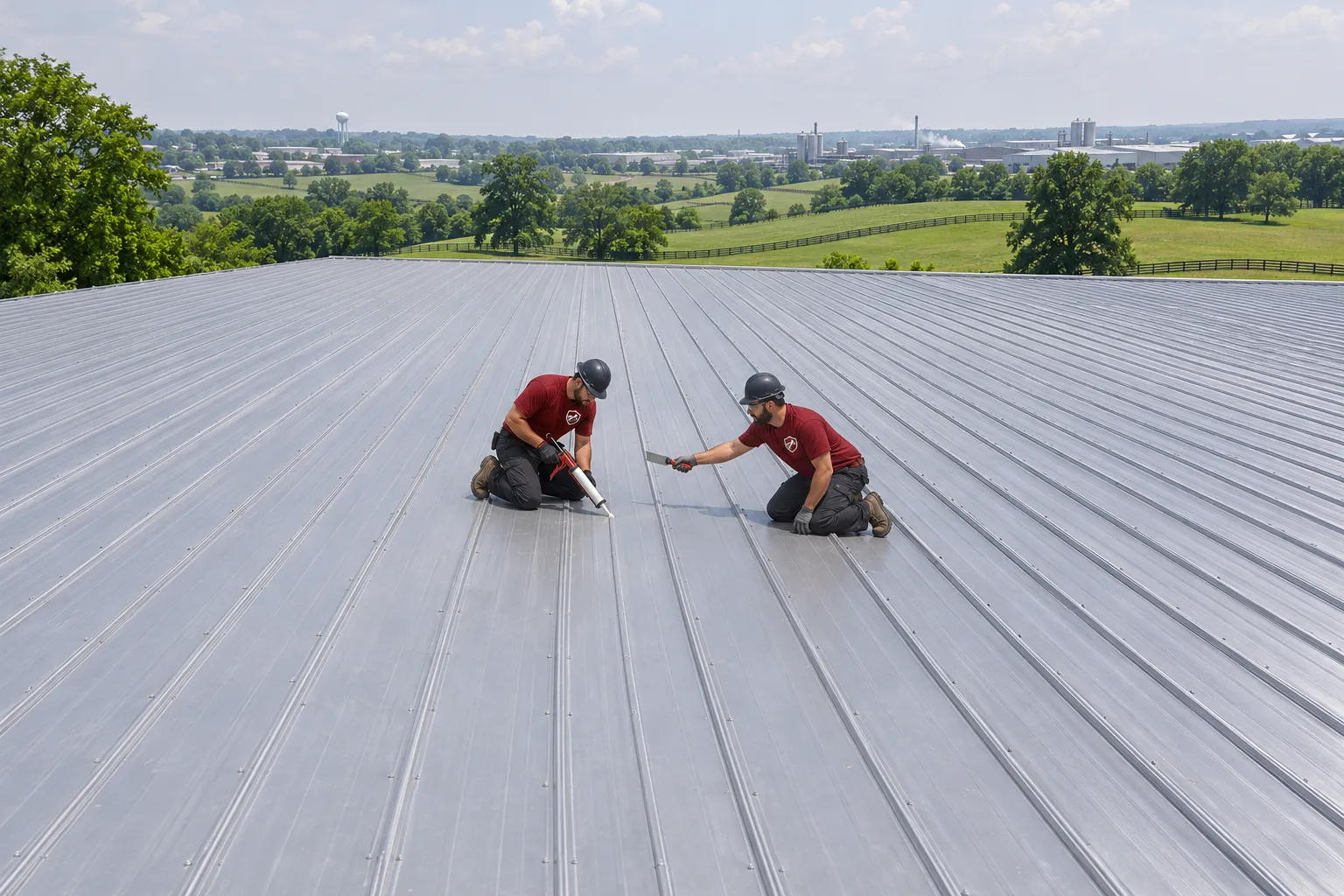
Backed-out screws and failed end laps cause most leaks on exposed-fastener metal roofs.
Metal roof repair →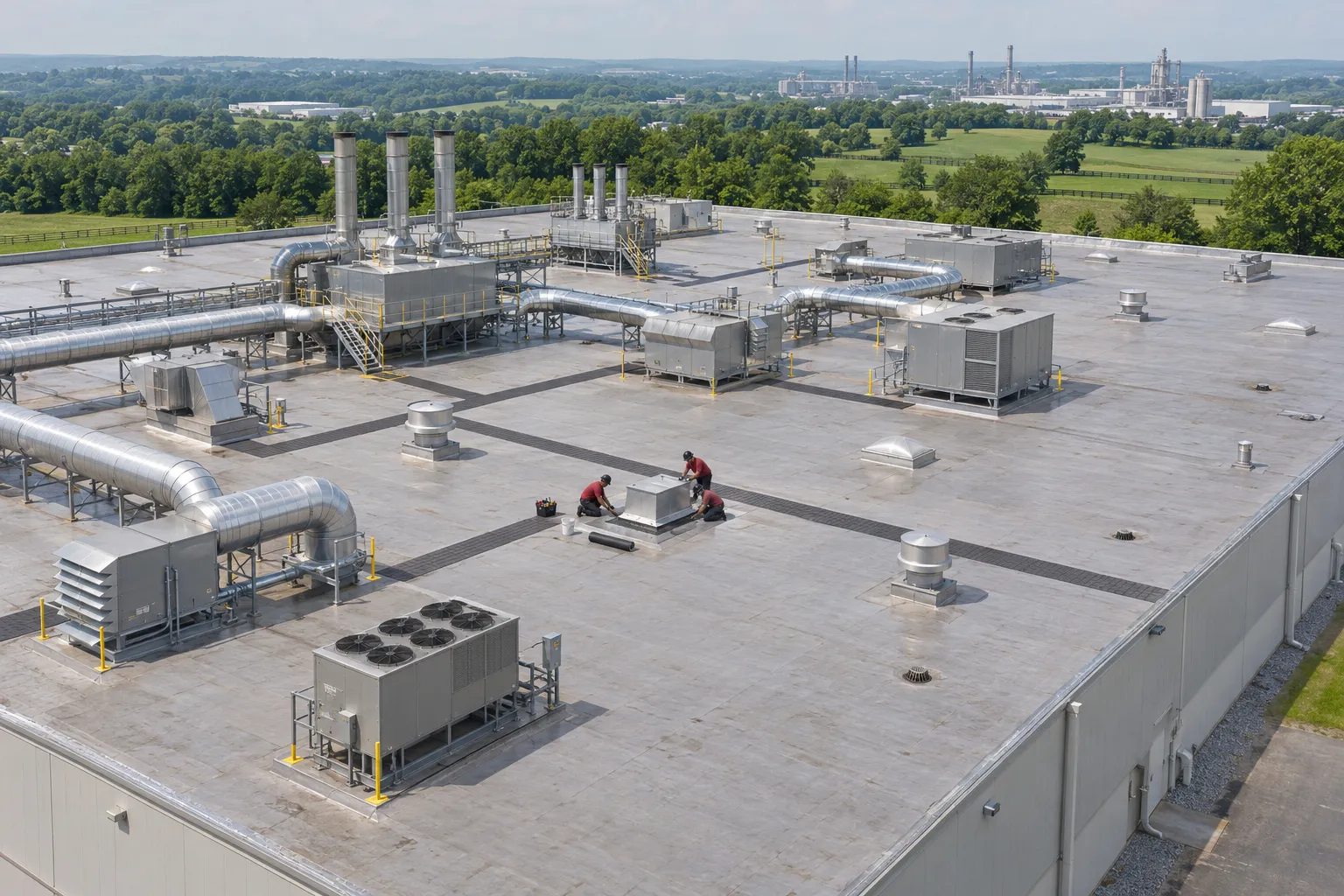
Large plant roofs carry long leak paths, remote internal drains, and dozens of exhaust fans.
Industrial roof repair →Five leak questions owners ask, answered for commercial roofs around Georgetown.
Tracing starts at the wet spot inside, measures its position against the roof above, and checks every detail upslope of it. Water follows deck flutes and purlins before it drips, so the opening is often well away from the stain. Suspect spots get water-tested one at a time, starting low, and moisture meters map wet insulation.
Leaks show up where the roof meets something else: a curb, wall, drain, pipe, or seam. On TPO and PVC that means seam edges, curb corners, and pipe boots. EPDM leaks at tape edges and shrinking walls, modified bitumen at blisters and open laps, and metal at screw washers, end laps, skylights, and ridge caps.
Some details handle normal rain but get overwhelmed or blown open in a big storm. Wind pushes water sideways under laps and counterflashing, and heavy rain backs water up behind clogged drains. Keep a log of the date, wind direction, and rainfall each time it leaks, since that pattern narrows the search quickly.
Pitch pans are metal boxes flashed into the roof around odd-shaped penetrations like steel supports or bundled cables, then filled with sealant. The filler shrinks and pulls away over time. Repair means cleaning out and refilling the pan with pourable sealer, replacing it, or swapping it for a pre-formed boot or hooded curb where the penetration allows.
Yes, a leak can be slowed or stopped in the rain with wet-surface mastic or tape, and the permanent repair follows once the roof dries. A rain-day visit clears backed-up drains, patches any obvious opening, protects stock inside, and photographs the area. Welding, priming, and adhesives all need a dry surface, so that work waits.
Tell us where the water shows inside and when it leaks. We trace it to the detail above and repair that detail.
Leave a name and number, or call +1 (606) 221-5686 now.